

The Complete Hair Transplant Guide
A hair transplant moves your own hair follicles from an area that keeps its hair — usually the back and sides of the head — to areas that have thinned. It redistributes hair you already have rather than creating new hair, so the amount that can be moved is limited, and the result appears gradually over about 9–12 months.
What a hair transplant is — and what it is not
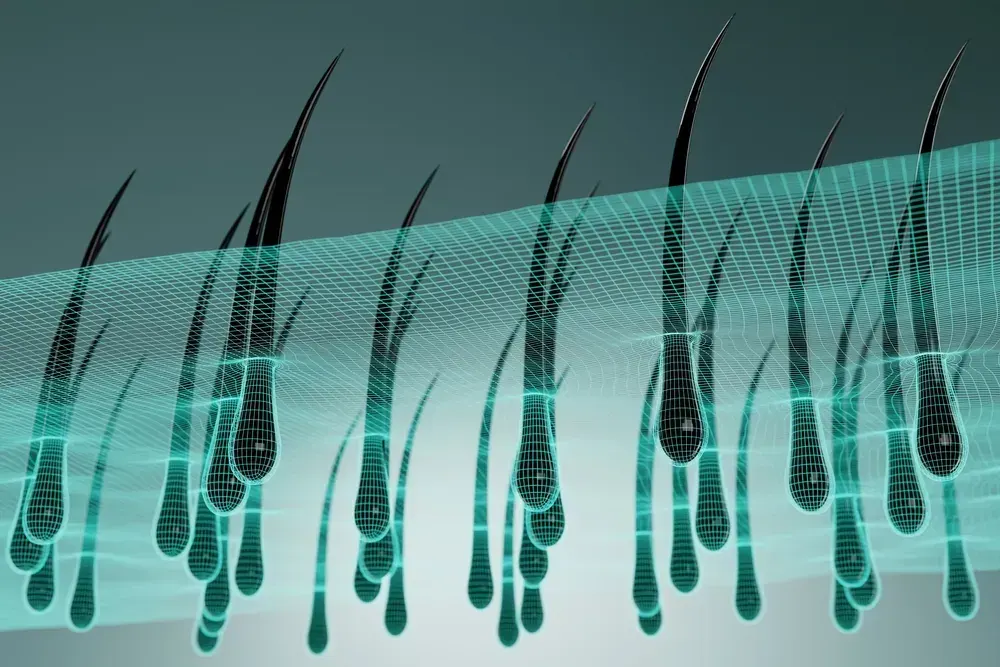
In a hair transplant, small groups of one to a few hairs, called follicular units, are taken from a donor area and placed in tiny openings in the thinning area. Each unit keeps its own root, so the moved hair carries on growing in its new place. Other terms you will meet in a plan are explained in the hair transplant glossary.
It is not a way to create more hair, and it does not stop hair loss that is still going on. Hair that is not moved can keep thinning, which is why planning looks years ahead, not only at the next few months.
Why the donor area matters most
In pattern hair loss, hair at the back and sides of the head is usually less affected than hair on top. That is what makes it suitable for moving: it tends to behave as it did in its original place. But the donor area holds a fixed number of follicles, and each one can only be used once.
This is the single most important limit in hair restoration. A plan has to balance how much area to cover now with how much donor hair may be needed later, and how dense the donor area looks after hair has been taken from it.
FUE, DHI and Sapphire FUE in plain terms
The main techniques differ in how grafts are taken out and how they are put in, not in what is moved. FUE removes follicular units one by one; DHI places them with a pen-like implanter; Sapphire FUE is FUE in which the openings for the grafts are made with a sapphire blade. The comparison of hair transplant techniques goes into the details.
| Technique | How grafts are taken out | How grafts are placed |
|---|---|---|
| FUE | One by one with a small punch | Into openings made in advance |
| DHI | One by one with a small punch | With an implanter pen that opens and places in one step |
| Sapphire FUE | One by one with a small punch | Into openings made with a sapphire blade |
Who is usually a candidate — and who may not be
People most often considered for a transplant have pattern hair loss that has settled into a predictable shape, a donor area with enough healthy hair, and expectations that match what the donor area can give. Suitability is decided at an assessment of your own scalp, not from a general rule.
Some situations call for a different first step: hair loss that is still changing quickly, certain scalp conditions, hair loss from causes other than pattern loss, or a donor area too thin for the area to be covered. Our guide to the causes of hair loss explains why the cause is checked first, and the candidate quiz gives a first impression.
What happens on the procedure day
The day starts with the hairline and the areas to be covered being drawn and agreed. The scalp is numbed with local anaesthetic; grafts are then taken from the donor area and placed in the thinning area. It usually takes most of a day, and you are awake throughout. The procedure day guide goes through it hour by hour.
Healing and growth
The first two weeks are about healing: small crusts form around each graft and loosen within one to two weeks, and the NHS advises being very careful with transplanted hair in this period. Most of the transplanted hairs then shed — an expected stage — before new growth starts around month 4. Density keeps building, and the result is judged at about 9–12 months. The month-by-month timeline shows what is normal at each stage.
Risks to know about
Like any procedure, a hair transplant carries risks: temporary swelling, numbness or pain, infection, scarring, a result that looks thinner or less natural than hoped, and over-harvesting of the donor area if too much is taken. Some of these are rare; some depend on planning. The risks and complications page explains each one and how it is reduced. Individual results vary.
Where to go next
 CompareHair Transplant Techniques in TurkeyCompare FUE, DHI, Sapphire FUE and unshaven…Compare techniques
 GuideThe Complete Hair Loss GuideUnderstanding hair loss: the common causes a…Read the guide Patient journeyHair Transplant TimelineHair transplant timeline month by month: hea…What to expect GuideHair Transplant Risks & ComplicationsAn honest overview of the possible risks and…Read the guide
 GuideHair Transplant in Turkey: Costs, Techniques and ResultsFUE, DHI and Sapphire FUE hair transplants i…Read the guide
Common questions
How does a hair transplant work?
Does a hair transplant hurt?
Does a hair transplant create new hair?
How long does a hair transplant take to grow?
Sources & further reading
- NHS — Hair transplant
- American Academy of Dermatology — Hair loss: hair transplants
- International Society of Hair Restoration Surgery (ISHRS) — Patient brochure
This content is for general information only and does not replace a personal medical consultation. Any procedure carries risks that are discussed during your assessment; individual results vary.
Start with a free hair analysis
Share a few photos and our patient team will come back with an indicative plan, the technique that fits and the package that applies — no obligation.