

Hair Transplant Risks & Complications
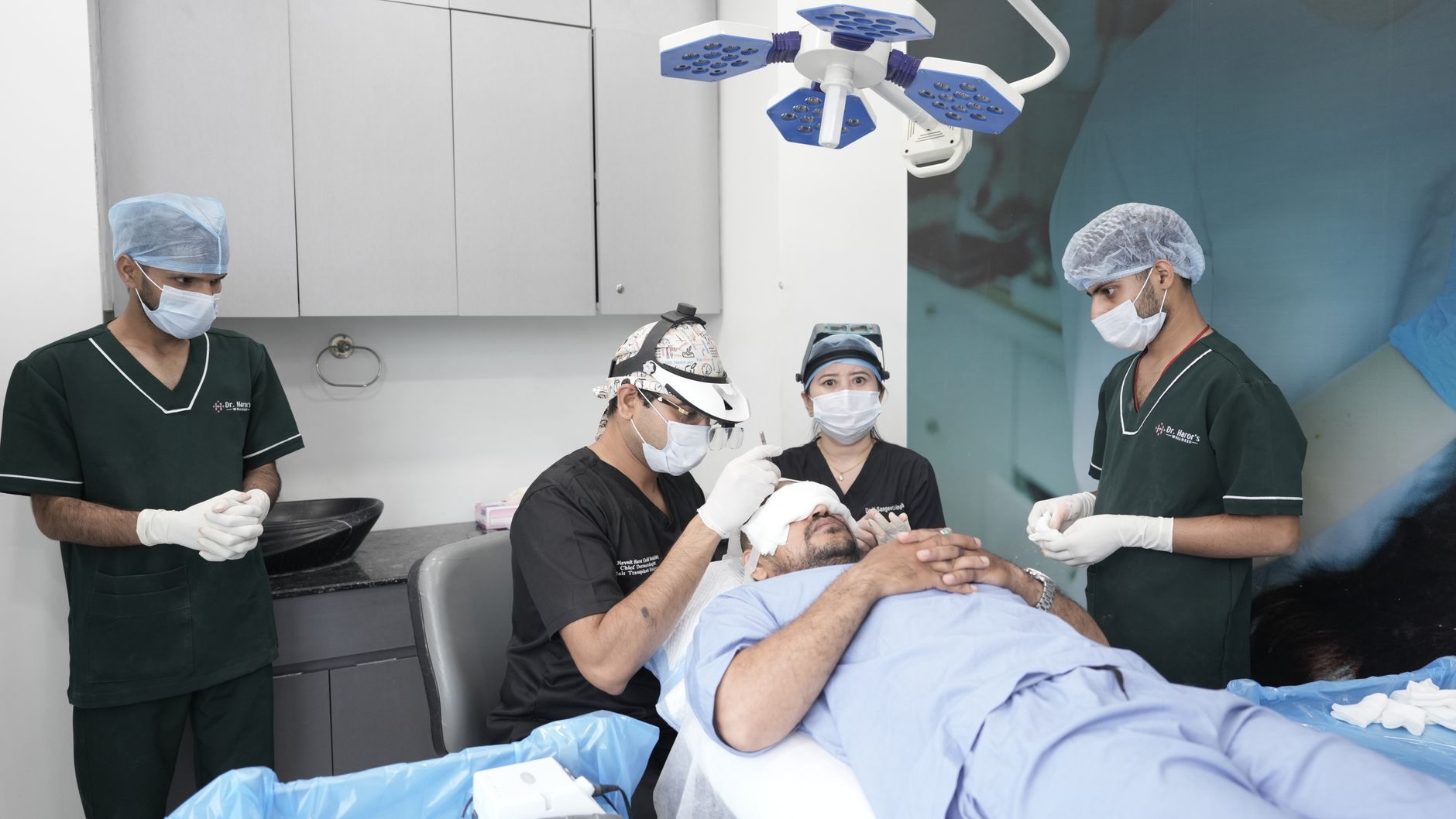
A hair transplant is generally considered a low-risk elective procedure, but like any surgery it carries risks. The common effects — swelling, redness, scabbing, temporary numbness and shock loss of existing hairs — are short-lived and expected. Less common complications such as infection, folliculitis, poor graft survival or an unnatural hairline are largely avoidable with a properly assessed plan, a sterile clinic and careful aftercare. Risks are individual, and yours are reviewed at a personal assessment.
Common, expected side effects
Most of what people experience after a transplant is normal healing rather than a complication. The recipient area is pink and forms small crusts around each graft; mild forehead swelling can appear in the first few days; and the donor area feels tender. Transplanted hairs then shed within a few weeks — shock loss — before the follicles rest and regrow over the following months. None of this signals a problem.
Less common complications — and how they are avoided
Serious complications are uncommon when the case is properly assessed and carried out in a sterile setting, but they are worth understanding. Infection and folliculitis are rare and usually treatable when caught early. Poor graft survival, over-harvesting of the donor area, or an unnatural hairline are largely a function of planning and technique — which is why careful assessment and realistic design matter more than any single device or marketing claim.
Warning signs to raise with your team
Alongside the expected healing, a few signs are worth flagging early through your post-transplant follow-up: spreading redness or warmth, pus, a fever, severe or worsening pain, or bleeding that does not settle. Raising these promptly is the single best way to keep a minor issue minor. Reputable clinics build follow-up and a complication-management route into the aftercare programme rather than treating the operation as the end of care.
Scarring — what to realistically expect
Modern FUE-based transplants don't leave a single linear scar; instead the donor area heals with tiny dot scars where individual grafts were taken. In most people these are difficult to see once healed, especially at typical hair lengths, but they exist and can be more noticeable if the head is shaved very short or if the donor area was over-harvested. The recipient area generally heals without visible scarring. Honest planning — not taking too many grafts from the donor — is the main thing that keeps scarring minimal, which is another reason careful assessment matters.
How to lower your risk
Most of what determines a safe, uneventful recovery is decided before and after the procedure, not just during it. The biggest levers are choosing a properly assessed plan in a clinic with clear sterilisation and a real follow-up route; being fully honest about your health, medication and lifestyle so anything that affects surgery can be managed; and then following the aftercare instructions exactly in the first weeks. Realistic expectations are part of it too — a conservative, age-appropriate plan is far less likely to disappoint than one promising unnatural density.
Suitability, risks & alternatives
General guidance only — we confirm whether a procedure is appropriate for you at a personal assessment.
Potential risks
- Swelling, redness, scabbing and temporary numbness in the first weeks
- Shock loss of existing hairs around the transplanted zone
- Infection or folliculitis (uncommon; treatable when caught early)
- Variable graft survival and, rarely, an unnatural hairline if poorly planned
- Small dot scars in the donor area (usually hard to see once healed)
Risks are individual and are discussed in full during your consultation.
Recovery timeline
Most early effects settle within one to two weeks; regrowth builds over 9–12 months.
Risks are individual. Your health, medication, donor area and expectations are reviewed at a personal assessment before confirming whether a procedure is appropriate for you — this page is general information, not medical advice.
Where to go next
 Patient journeyAfter a Hair Transplant: Aftercare GuideThe aftercare that protects your result — wa…What to expect Patient journeyShock Loss After a Hair TransplantWhy transplanted (and some existing) hair sh…What to expect TrustPatient SafetyHow we work to recognised clinical standards…How we work Patient journeyQuestions to Ask Before a Hair TransplantThe questions to ask any clinic before booki…What to expect
 Patient journeyFree Hair AnalysisShare a few photos and our patient team will…What to expect
Common questions
Is a hair transplant dangerous?
Can a hair transplant fail?
Does a hair transplant leave scars?
How common are complications after a hair transplant?
What is shock loss?
How do I lower the risks?
Is swelling after a hair transplant normal?
Can I prevent shock loss?
Sources & further reading
This content is for general information only and does not replace a personal medical consultation. Any procedure carries risks that are discussed during your assessment; individual results vary.
Start with a free hair analysis
Share a few photos and our patient team will come back with an indicative plan, the technique that fits and the package that applies — no obligation.