

Female Hair Transplant in Turkey
A hair transplant can help some women, but fewer women than men are good candidates. It suits stable, patterned thinning or a high or receded hairline, with a full donor area at the back. Diffuse thinning, or hair loss with a treatable cause such as a thyroid or iron problem, needs diagnosis and treatment first. Individual results vary.
Why the cause of your hair loss is checked first, how patterned and diffuse thinning differ, who tends to be a candidate and who is not, how to keep your hair long, and what a transplant can and cannot do.

Why does the cause of your hair loss come first?
Women lose hair for many reasons, and several of them look alike in the mirror. Health and dermatology bodies such as the American Academy of Dermatology, the British Association of Dermatologists and the NHS list these among the common causes:
| Cause | How it often shows | Why it matters for a transplant |
|---|---|---|
| Female pattern hair loss | Gradual thinning over the top of the head and a widening parting, usually with the front hairline kept | The most common reason women consider a transplant, but it tends to continue over time |
| Shedding after a trigger (telogen effluvium) | Sudden, heavy shedding a few months after childbirth, illness, high stress, an operation or rapid weight loss | It often settles on its own once the trigger has passed |
| Thyroid problems or low iron | Diffuse thinning, sometimes with other symptoms such as tiredness | Treating the underlying problem can let the hair recover |
| Hormonal changes | Thinning around menopause, or with conditions such as polycystic ovary syndrome (PCOS) | The hormonal side is assessed and treated by your own doctor |
| Traction from tight styles | Thinning at the temples and along the front edge after years of tight ponytails, braids, weaves or extensions | Caught early it can recover; long-standing traction loss can become permanent |
| Patchy or scarring hair loss | Round bald patches, or a receding hairline with redness, itching or shiny skin | These conditions need a dermatologist; scarring types are generally not transplanted while active |
This is why the first step is a medical check, not a graft count. A doctor or dermatologist can examine your scalp, ask about your health, medicines and recent life events, and arrange blood tests, for example for iron and thyroid function, where they are needed. The AAD and the NHS both advise seeing a doctor about hair loss that is sudden, patchy, itchy or painful.
Operating on hair loss that would have improved with treatment uses up donor hair that cannot be replaced. If you already have a diagnosis, bring it with you; it makes every later step clearer.
Patterned thinning or diffuse thinning — why the difference matters
In most men, hair loss follows a recognisable map: the hairline moves back, the crown thins, and the back and sides stay full. Female pattern hair loss usually looks different. The AAD and the BAD describe thinning over the top of the head, often first noticed as a parting that gets wider, while the front hairline tends to stay in place.
For a transplant, the question that matters most is what happens at the back and sides. Grafts are taken from there because that hair usually keeps growing. In some women, though, the thinning is spread over the whole scalp, including the back. Hair restoration bodies such as the ISHRS describe this diffuse, unpatterned thinning as a poor fit for surgery: the donor hair may be thinning too, so moving it gives a weak or short-lived result.
Ask to have your donor area assessed as carefully as the area you want to fill. In women, the back of the head decides more than the front.
Which women tend to be good candidates?
Women's hair restoration guidance from the ISHRS describes a few groups for whom surgery is more likely to make sense. What they share is a defined area to fill and a stable donor area.
Thinning at the top or front that has slowed down, often after medical treatment, with a dense donor area at the back.
A naturally high forehead, or a hairline and temples that have moved back. A rounder, softer front line is planned; see hairline transplant.
Temples or edges that have not recovered after the tight styling stopped, so the loss is permanent and no longer changing.
Areas left without hair by an injury, a burn or an earlier operation such as a facelift, once the scar has settled.
Your age, how fast the hair loss has changed over the last year or two, and how you wear your hair all shape the plan. For the wider range of options, including treatments without surgery, see our overview of hair restoration treatments.
When is a transplant not the right step?
Saying no, or not yet, is part of a careful plan. A transplant is usually postponed or advised against when:
- the cause of the hair loss has not yet been found, or is still being treated;
- the shedding is recent and sudden, for example in the months after childbirth, illness or crash dieting, and may still recover;
- the thinning is spread over the whole scalp, including the back and sides;
- the hair loss is still changing quickly from one year to the next;
- a patchy or scarring condition is active;
- the hope is for the overall thickness of earlier years rather than for a defined area.
In those cases treatment for the hair you have, and sometimes camouflage such as fibres or a different parting, usually comes first. Many women find that is enough. A transplant can still be looked at again later, once the picture is stable.
Can you keep your hair long?
Most women do not want their head shaved, and in many cases it does not have to be. In an unshaven or partly shaven plan, a narrow band of hair is trimmed at the back, under a layer of longer hair that falls over it, and the grafts are taken from there. The thinning area is left long, and the grafts are placed between the hairs that are still there.
There are trade-offs. Working between long hairs is slower, so fewer grafts usually fit into one day, and a very large area may need a shaven plan or two sessions. Placing grafts among existing hair can also cause some of that hair to shed for a while, which is discussed below. The methods, and how they compare, are explained on the no-shave hair transplant page.
What a transplant can and cannot do for a woman
| It can | It cannot |
|---|---|
| Add hair to a defined area such as the hairline, temples or a parting | Restore the density of the whole head |
| Move hair that tends to keep growing in its new place | Create new hair or add to your total amount of hair |
| Grow long and be styled like the rest of your hair | Stop the thinning of the hair that was not moved |
| Fill a stable scar or traction area | Fix diffuse thinning when the donor area is thinning too |
Hair moved from the donor area keeps the character of the hair it came from, which is why it tends to last, according to the ISHRS. That holds only as long as the donor hair is stable; in women this is checked rather than assumed. The hair around the transplant can keep thinning, so many women continue medical treatment afterwards.
Hair placed close to existing fine hair can trigger temporary shedding of that hair, known as shock loss. The ISHRS describes it as usually temporary, but it can be upsetting when hair is already thin. Other possible problems are covered on the hair transplant risks page.
The grafts follow the usual growth stages: shedding first, new growth from about month 4 and much of the result by 9–12 months; the hair transplant timeline covers each one. Photos of women's cases are collected on female before-and-after cases. Individual results vary.
Hair loss medicines before and after a transplant
Medicine is often the first treatment for female pattern hair loss, and often continues alongside a transplant. The AAD describes minoxidil applied to the scalp as an approved treatment for women. It works only while you use it, it can cause a short spell of extra shedding at the start, and the AAD advises against it during pregnancy and breastfeeding.
Finasteride, often mentioned on men's hair transplant pages, is listed by the NHS as a treatment for men, not for women. Some dermatologists prescribe hormone-blocking tablets for women's pattern loss; whether they suit you, and what to know if you are pregnant or planning a pregnancy, is for your own doctor to advise. Some clinics also offer PRP injections; the evidence for them is still limited, as the PRP hair treatment page explains.
Do not start, stop or pause a prescribed medicine to have a transplant without speaking to the doctor who prescribed it. At your assessment, list every medicine and supplement you take, including hormonal contraception, hormone replacement and blood thinners.
How to prepare for an assessment
A photo assessment shows the pattern of your hair loss; it cannot diagnose its cause. These details help make the advice specific to you:
- clear photos of your parting, hairline and temples, and of the back of your head with the hair lifted;
- when the thinning started and whether it came on gradually or suddenly;
- any diagnosis or blood test results you already have;
- recent pregnancy, menopause, illness, weight change or a new medicine;
- how you usually wear your hair, and whether shaving any of it is an option for you.
You can send these through our free hair analysis. It is worth asking any clinic you consider the questions on the clinic safety checklist, including who carries out each step of the procedure.
What does a female hair transplant cost?
With Natural Hair Turkey it costs one of three package prices, between €1,600 and €2,100 (approx. $1,850–$2,400), for up to 5,000 grafts, the same whether the plan is shaven or unshaven. Our guide to hair transplant cost in Turkey explains what each package covers.
Payment is taken in euros; dollar amounts are approximate.
Female hair transplant: your questions
Is a female hair transplant permanent?
Do I need blood tests before a hair transplant?
Can traction alopecia be treated with a transplant?
Will people notice in the first weeks?
Can a hair transplant fix a widening parting?
Should I wait after pregnancy before deciding?
Will the transplanted hair grow long?
Sources & further reading
- American Academy of Dermatology
- British Association of Dermatologists
- NHS (United Kingdom)
- International Society of Hair Restoration Surgery (ISHRS)
This content is for general information only and does not replace a personal medical consultation. Any procedure carries risks that are discussed during your assessment; individual results vary.
Related pages
 GuideNo-shave hair transplantA no-shave hair transplant leaves surroundin…Read the guide
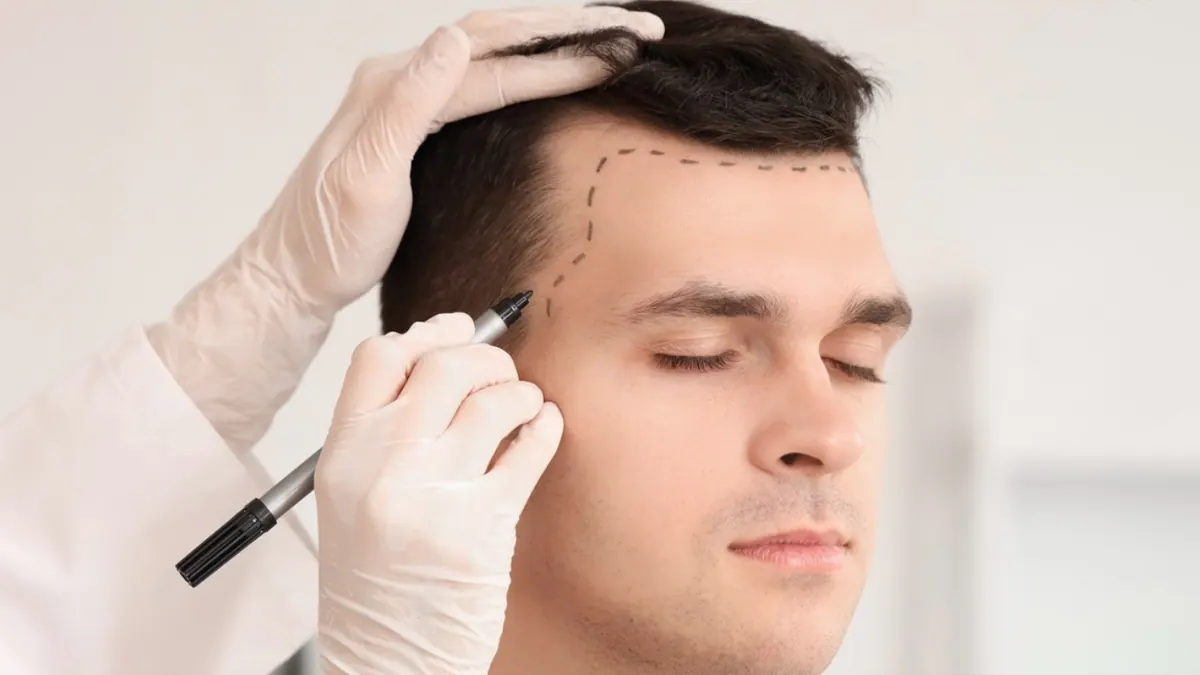
 GuideHairline transplantHairline design and restoration — a natural,…Read the guide
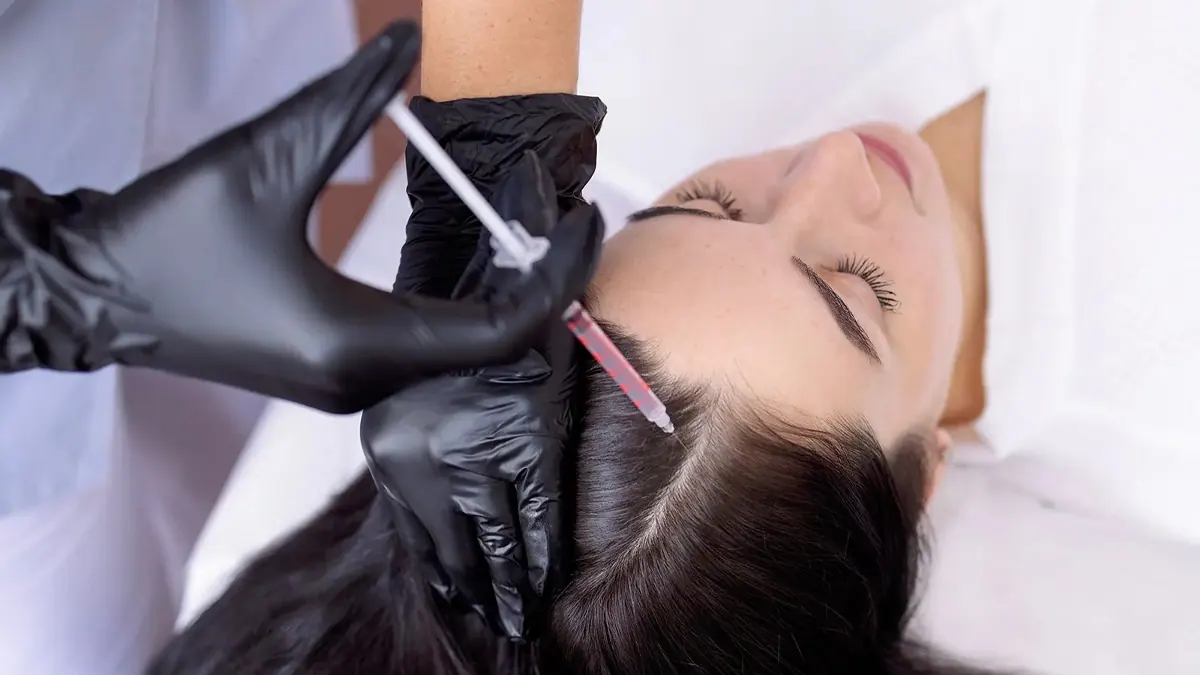 GuidePRP hair treatmentPlatelet-rich plasma (PRP) therapy to suppor…Read the guide
 GuideAfro Hair Transplant in TurkeyHow curled follicles are taken out intact, w…Read the guide GuideBeard Transplant in TurkeyBeard and moustache restoration with FUE/DHI…Read the guide GuideEyebrow Transplant in TurkeyEyebrow restoration for thin, over-plucked o…Read the guide
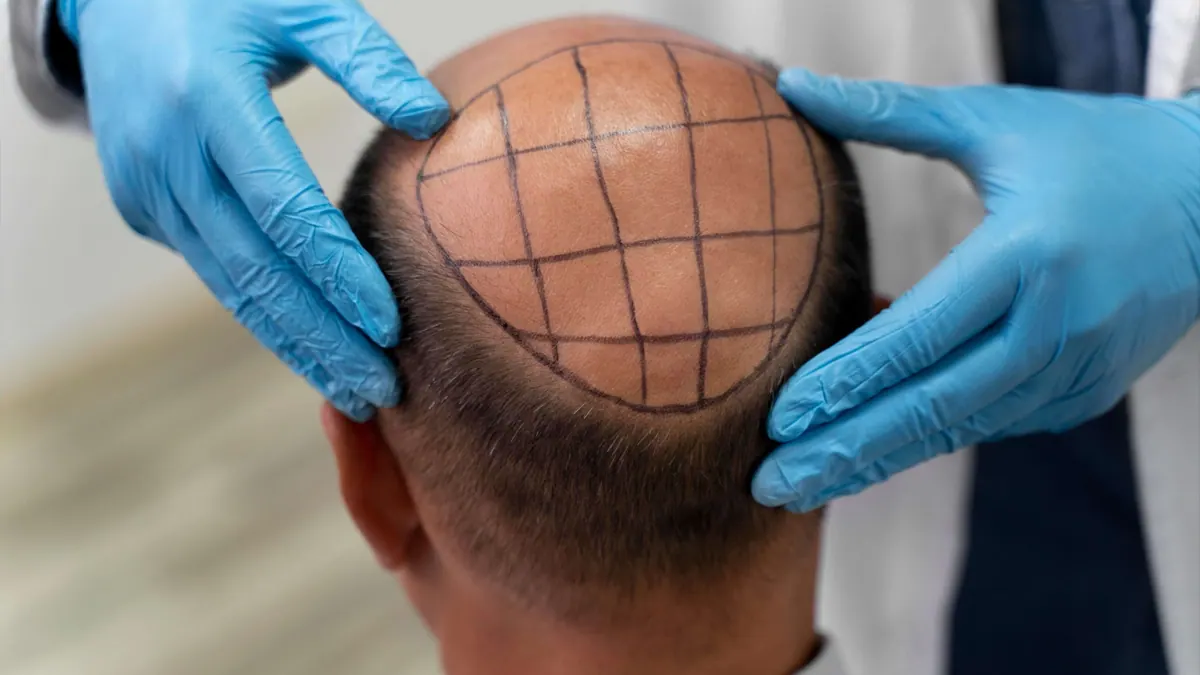 GuideCrown Hair Transplant in TurkeyWhy the crown's whorl takes many grafts and…Read the guide
Want to know whether a transplant suits your hair?
Send photos of your parting, hairline and the back of your head for a free hair analysis, with any diagnosis you already have. We reply with whether a transplant looks like an option for you, the approach that would fit and the package that applies — with no obligation to book.