

Eyebrow Transplant in Turkey
An eyebrow transplant places single hairs, usually taken from the back of your scalp, into thin, over-plucked or scarred brows, one at a time and at the flat angle brow hair grows. It suits brow loss whose cause is stable; the cause is checked first. It is priced after an assessment. Individual results vary.
When a transplant is the right fix, how the brow is designed, why transplanted brow hairs need trimming, and what the first weeks look like — plus eyelash transplants.
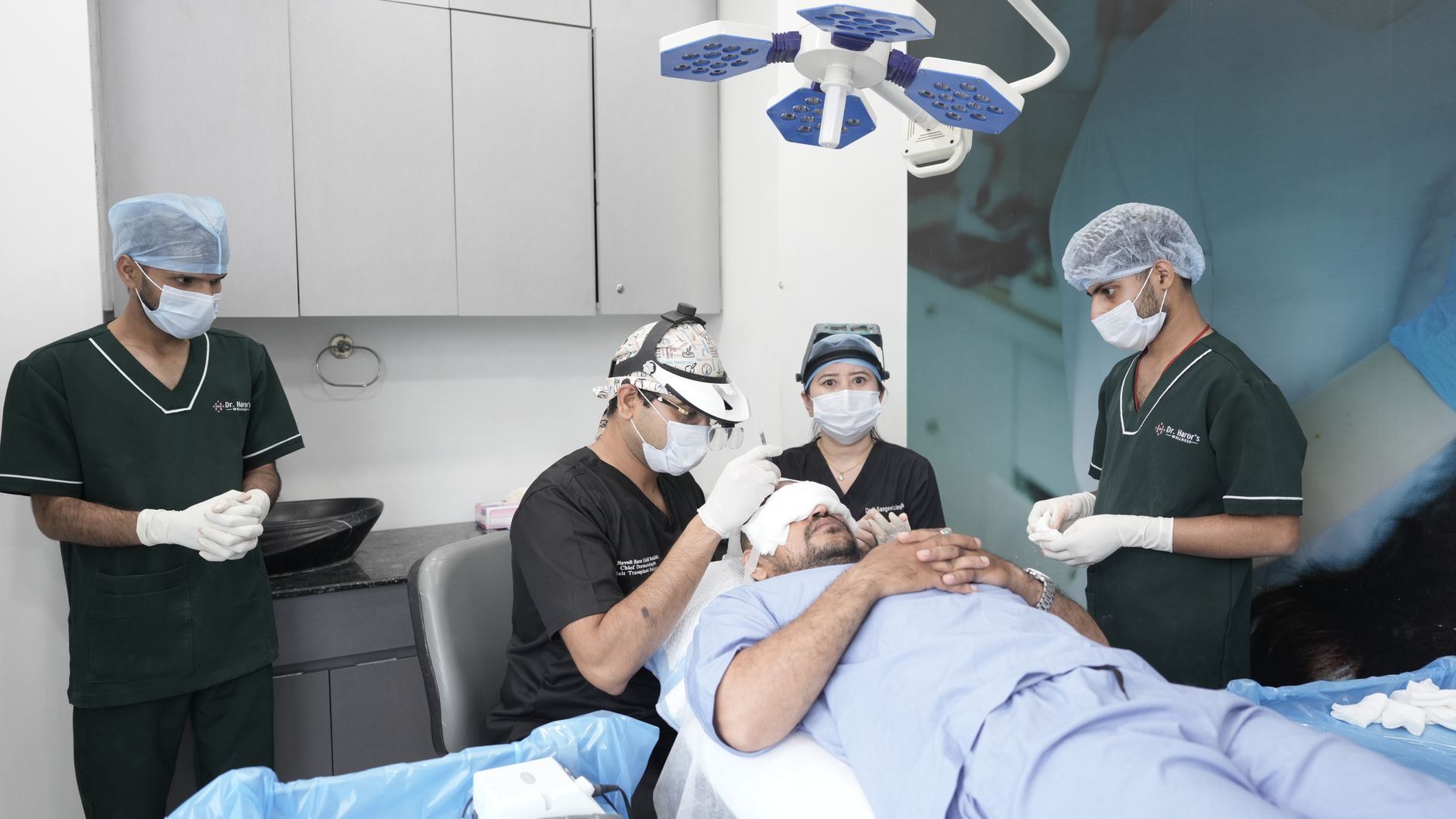
When is an eyebrow transplant the right fix?
Over-plucked brows; gaps from a scar; naturally sparse brows; a brow tail that has thinned and stayed thin.
Patchy brow loss that comes and goes, loss together with scalp or body hair, or brow loss with a skin condition.
A transplant tends to work well when the brow hair is gone for a reason that will not come back to affect the new hairs: years of plucking or waxing, a scar from an injury or surgery, or brows that have always been thin. In these cases the follicles are missing, and moving healthy ones from the scalp can restore them.
Brow loss can also be a sign of a medical condition, such as alopecia areata, a thyroid disorder or a scarring hair loss that affects the brows. While such a condition is active, transplanted hairs may be lost as well, so the cause is looked at before a transplant is planned, and sometimes treated first.
Designing the brow: head, arch and tail
The new brow is drawn on your face before anything else is done. The design follows your own brow bone and features: where the head of the brow starts, where the arch peaks and how far the tail runs. It is checked from the front, from the side and with your expression moving, and agreed with you.
Density is planned, not maximised. A brow that is too dense, too dark or too sharply edged looks drawn on, especially as the face ages. Leaving a softer, slightly irregular edge usually reads as natural.
Single hairs, flat angles: why brow placement is different
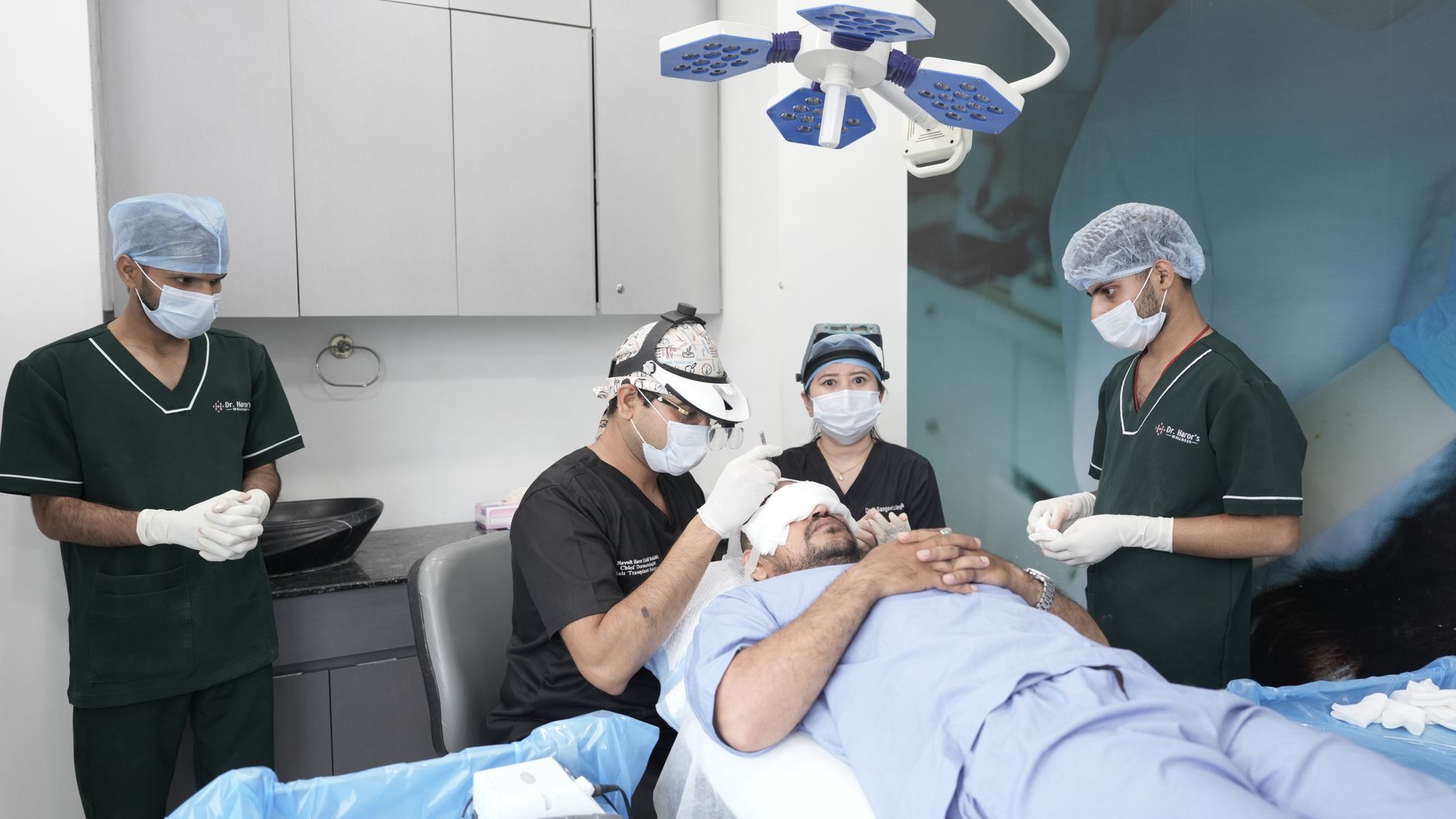
Brow hairs grow almost flat against the skin, and their direction changes along the brow: upwards at the head, sideways and slightly down towards the tail. Every graft is a single hair, placed at that angle and in that direction, which makes eyebrow work slower and finer than scalp work.
Because the brow is small, the number of grafts is much lower than in a scalp transplant. It is set from the drawn design and the gaps to fill, at your assessment.
Transplanted brow hair keeps growing: trimming afterwards
Transplanted hairs tend to keep the habits of the place they came from. Hairs taken from the scalp usually grow longer than natural brow hair and do not stop at brow length, so most people need to trim their new brows regularly, and some use a little brow gel to keep the direction.
Over time some transplanted brow hairs may grow more like brow hair, but this varies from person to person and cannot be predicted. Plan for trimming as part of looking after the result.
Eyelash transplants
Natural Hair Turkey also performs eyelash transplants, for lashes lost to injury, burns, surgery or long-term pulling. Single hairs, usually from the scalp, are placed along the lash line one by one. It is a delicate procedure close to the eye and is planned only after an assessment of the eyelid and the cause of the loss.
As with brows, transplanted lashes tend to keep growing like scalp hair. They usually need regular trimming, and some people need to curl them so they point in the right direction. Eyelash transplants are priced after an assessment.
The first two weeks on the face
Each brow graft leaves a tiny crust that usually falls away within the first week or so; until then the brows look slightly dotted and pink. Avoid rubbing, make-up on the brows and direct sun on the area until your clinic says otherwise, and sleep on your back if you can for the first nights.
Like scalp grafts, many of the transplanted brow hairs shed in the first weeks. The new hairs grow back over the following months, so the final shape and density take time to show. The scalp area the grafts came from is usually small and covered by surrounding hair.
How much does an eyebrow transplant cost?
Eyebrow and eyelash transplants are priced after an assessment, because the area, the design and the number of grafts differ too much between people for a fixed package. They are not covered by the scalp hair transplant packages.
Eyebrow transplant: your questions
Do transplanted eyebrows need to be trimmed?
Can I have an eyebrow transplant if I have alopecia areata?
Do you also do eyelash transplants?
Is an eyebrow transplant better than microblading?
Will my new eyebrows look natural?
Can I wear make-up after an eyebrow transplant?
Sources & further reading
- International Society of Hair Restoration Surgery (ISHRS)
- American Academy of Dermatology
- British Association of Dermatologists
- NHS (United Kingdom)
This content is for general information only and does not replace a personal medical consultation. Any procedure carries risks that are discussed during your assessment; individual results vary.
Related pages
 GuideBeard Transplant in TurkeyBeard and moustache restoration with FUE/DHI…Read the guide
 GuideHairline Transplant in TurkeyHairline design and restoration — a natural,…Read the guide GuideHair Restoration Treatments in TurkeyEvery hair restoration option in one place —…Read the guide
 GuideFemale Hair Transplant in TurkeyHair transplants for women — diffuse thinnin…Read the guide
 GuideAfro Hair Transplant in TurkeyAfro-textured hair transplants require speci…Read the guide
 GuideCrown Hair Transplant in TurkeyCrown (vertex) restoration — how the whorl p…Read the guide GuideTemple Hair Transplant in TurkeyTemple-point restoration to reframe the face…Read the guide
 GuideHair Transplant on Scars in TurkeyRestoring hair over surgical or accident sca…Read the guide
Want to see a brow designed for your face?
Send a few photos for a free assessment. We look at the cause of the brow loss, suggest a design and explain the next steps — with no obligation.