

DHI vs Sapphire FUE
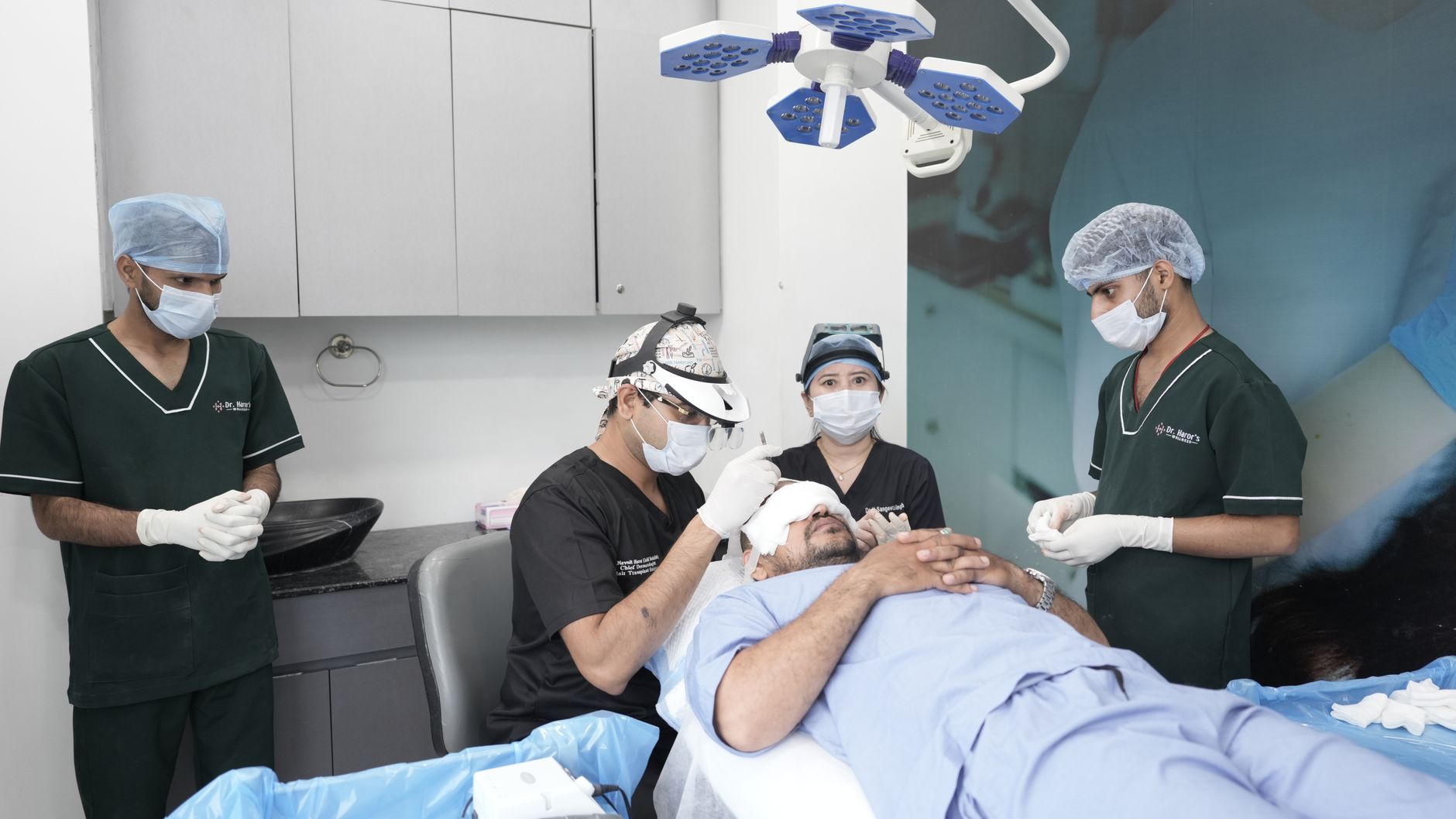
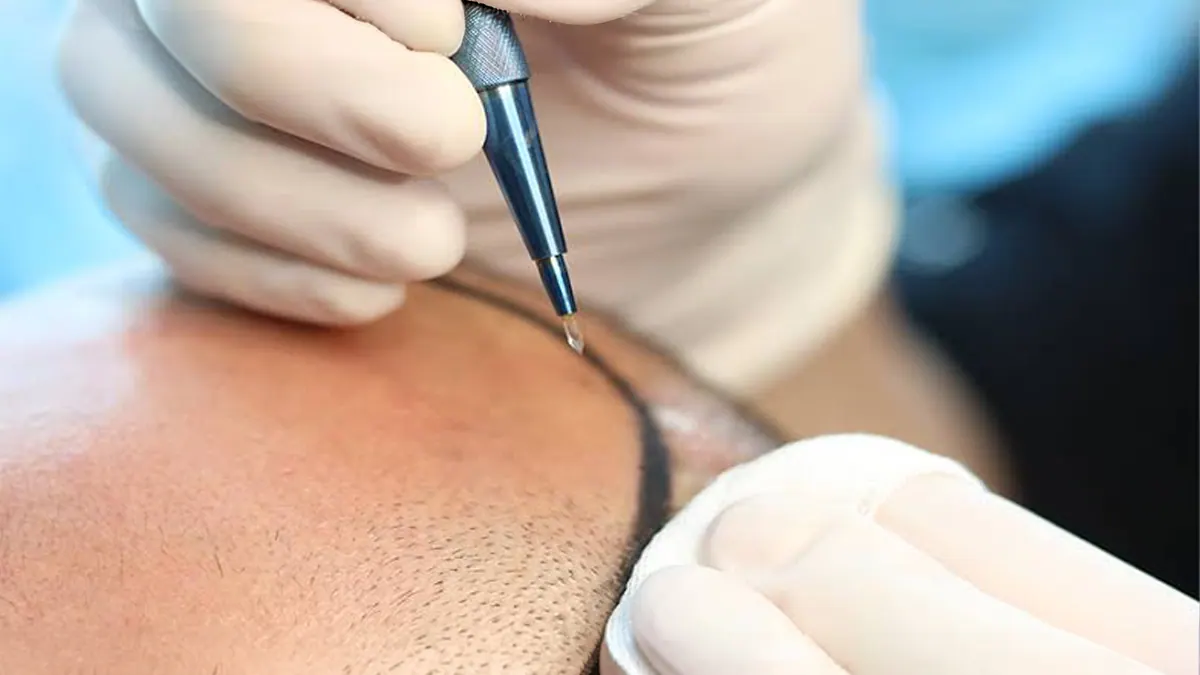
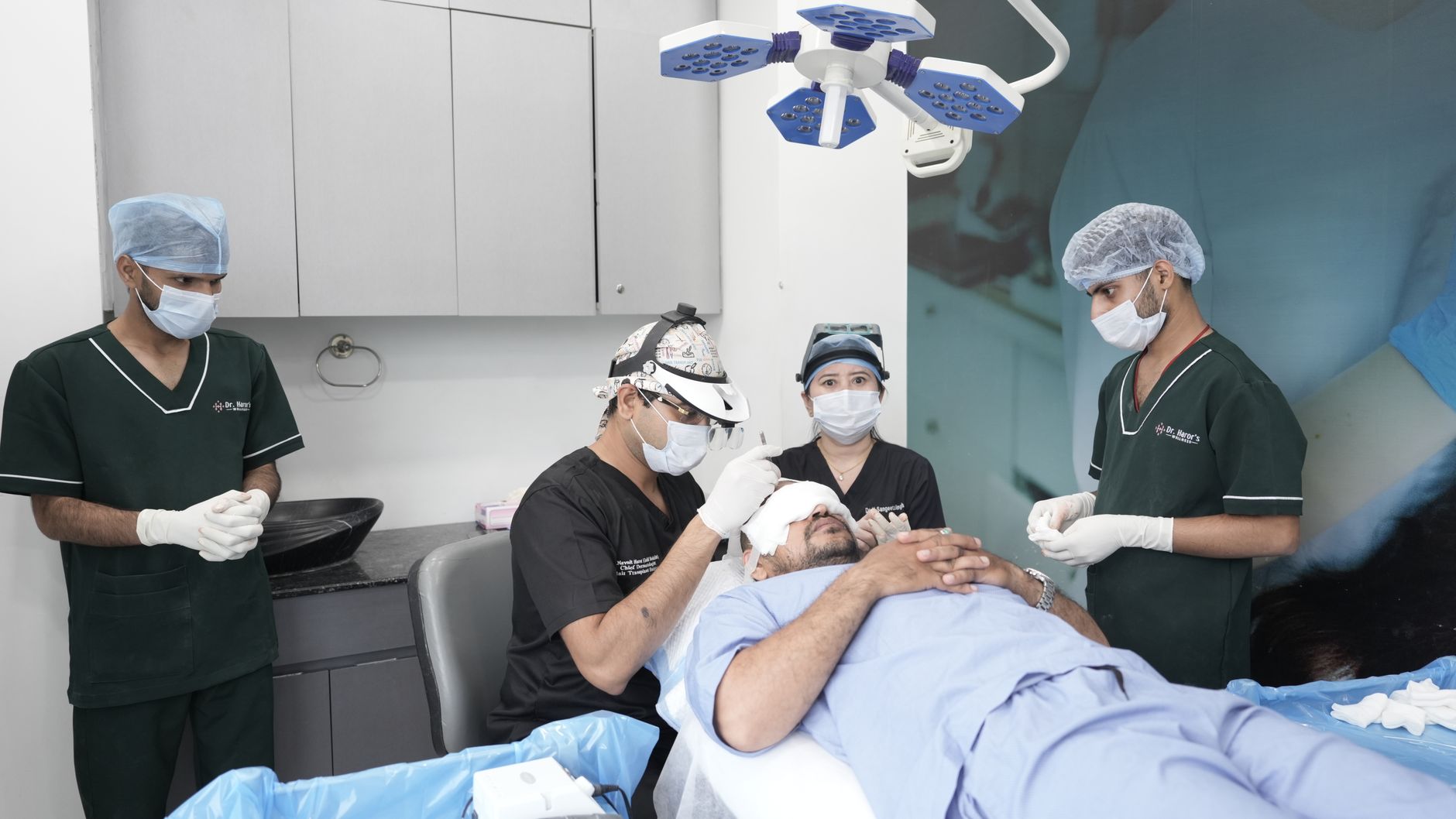
DHI and Sapphire FUE both extract follicular units with a micro-punch and leave no linear scar — they differ in how grafts are implanted. DHI uses an implanter pen that opens the channel and places the graft in one motion, giving fine control for hairline detail and targeted density. Sapphire FUE opens channels with a sapphire blade first, then places grafts, which suits dense, even coverage over larger areas. Neither is universally better; we confirm which fits your case.
The core difference: implantation
Both methods harvest grafts the same way, so the distinction is entirely in placement. With DHI, an implanter pen creates the channel and inserts the graft in a single action, which lets the surgeon control the angle, depth and direction of each hair very precisely. With Sapphire FUE, the surgeon first opens all the recipient channels using a smooth sapphire blade, then places grafts into them — a two-step rhythm that can be efficient across a larger canvas.
Where each tends to shine
DHI's per-graft control makes it a strong choice for the frontal hairline and for adding density in a defined zone, and it can support some unshaven cases. Sapphire FUE's channel-first approach lends itself to covering larger areas with consistent, natural density. In practice, an experienced surgeon may even combine approaches — for example DHI at the hairline and channel-based placement behind it.
What stays the same in both techniques
It is easy to focus on the differences, but DHI and Sapphire FUE share more than they diverge. Both extract follicular units individually with a micro-punch, both leave no linear scar, both are carried out under local anaesthetic in a single day for most cases, and both rely on your own permanent donor hair. Recovery, aftercare and the overall timeline to a mature result are broadly the same. The choice is about placement strategy, not two different operations.
How to decide between them
Rather than choosing a technique first, it helps to start from your case and let that point to the method. The area being treated, how much density you want, your hair calibre and your donor supply matter more than the name on the brochure. A defined hairline or a targeted density boost leans toward DHI's per-graft control; broad, even coverage across a larger balding area leans toward Sapphire FUE. Many surgeons combine the two, so the honest answer is often 'both, in the right places'.
| DHI | Sapphire FUE | |
|---|---|---|
| Extraction | Micro-punch | Micro-punch |
| Implantation | Implanter pen (all-in-one) | Sapphire-blade channels, then placement |
| Best for | Hairline detail, targeted density | Even density over larger areas |
| Angle/direction control | Very high, per graft | High |
| Shaving | Often partial | Usually full |
| Linear scar | None | None |
| Permanence | Uses DHT-resistant follicles | Uses DHT-resistant follicles |
Where to go next
 TechniqueDHI Hair Transplant in TurkeyDirect Hair Implantation (DHI) with implante…How it works
 TechniqueSapphire FUE Hair Transplant in TurkeySapphire FUE uses sapphire-blade channels fo…How it works
 TechniqueFUE Hair Transplant in TurkeyFollicular Unit Extraction (FUE) in Istanbul…How it works CompareFUE vs DHI Hair TransplantA side-by-side comparison of FUE and DHI — t…Compare techniques CompareSapphire FUE vs FUE Hair TransplantHow sapphire-blade channels compare with cla…Compare techniques
 Patient journeyFree Hair AnalysisShare a few photos and our patient team will…What to expect
Common questions
Is DHI better than Sapphire FUE?
Does one heal faster than the other?
Is DHI or Sapphire FUE more expensive?
Which lasts longer, DHI or Sapphire FUE?
Which one gives denser results?
Can they be combined?
Does Sapphire FUE hurt less than DHI?
Start with a free hair analysis
Share a few photos and our patient team will come back with an indicative plan, the technique that fits and the package that applies — no obligation.