

Temple Hair Transplant in Turkey
A temple hair transplant rebuilds the triangular temple points beside the forehead that recede with age or male-pattern loss. Restoring them reframes the face, softens a high or angular hairline and can make the whole hairline look more balanced. It is detailed work using fine, single-hair grafts placed at flat, natural angles, and we confirm the design and graft count after assessing your case.
Why the temples matter to the face
The temple points are the small wedges of hair that sit at the outer corners of the hairline, connecting it to the sideburns. When they recede, the forehead widens and the face can look longer or more severe. Rebuilding them lowers the visual corners of the hairline and restores the frame around the face.
Temple loss often accompanies a receding hairline, but some people lose temple density on its own — through ageing, tension from tight hairstyles, or previous work that left the corners too high. The goal is a soft, natural transition rather than a hard line.
Why temple work is technically demanding
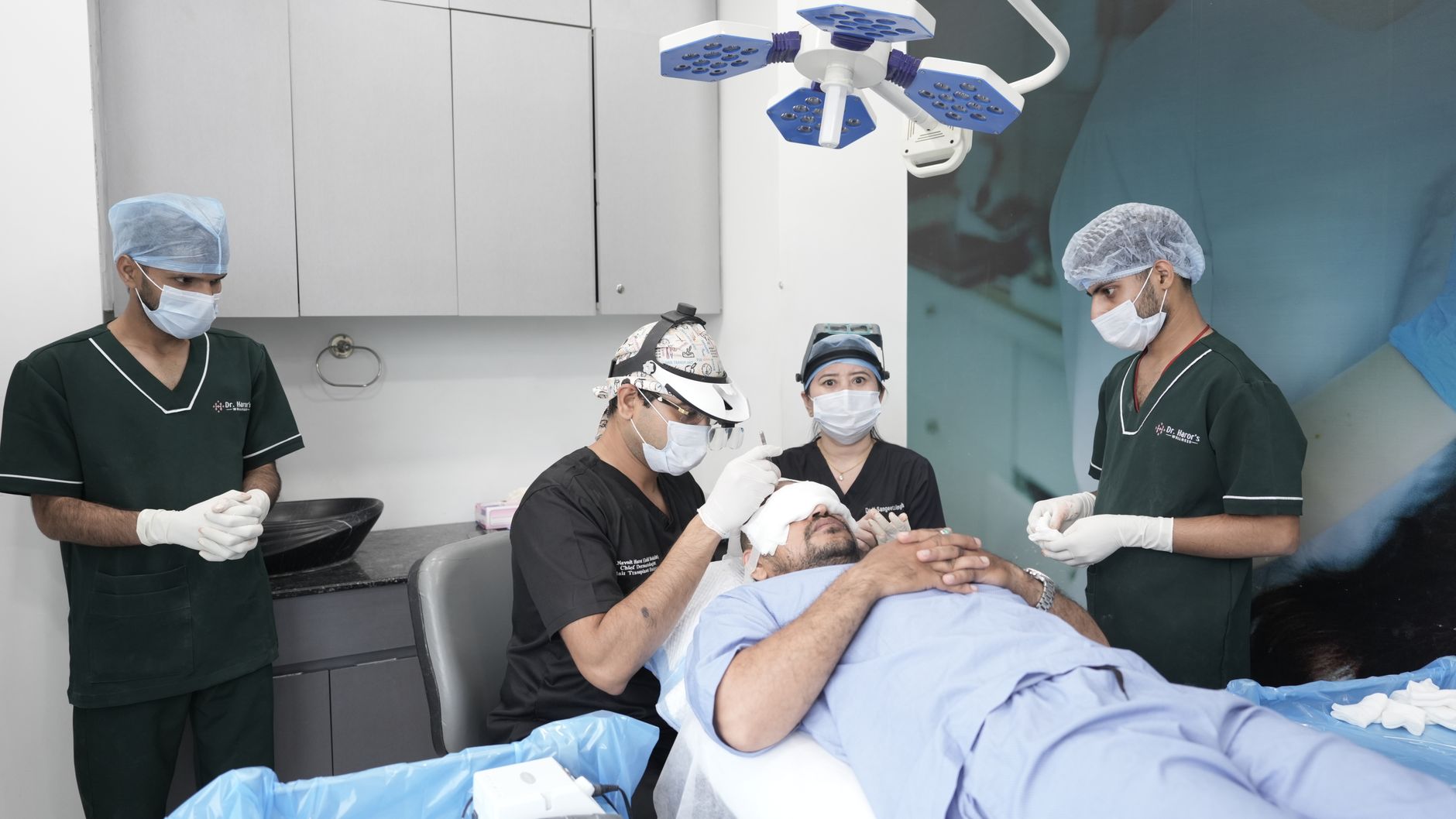
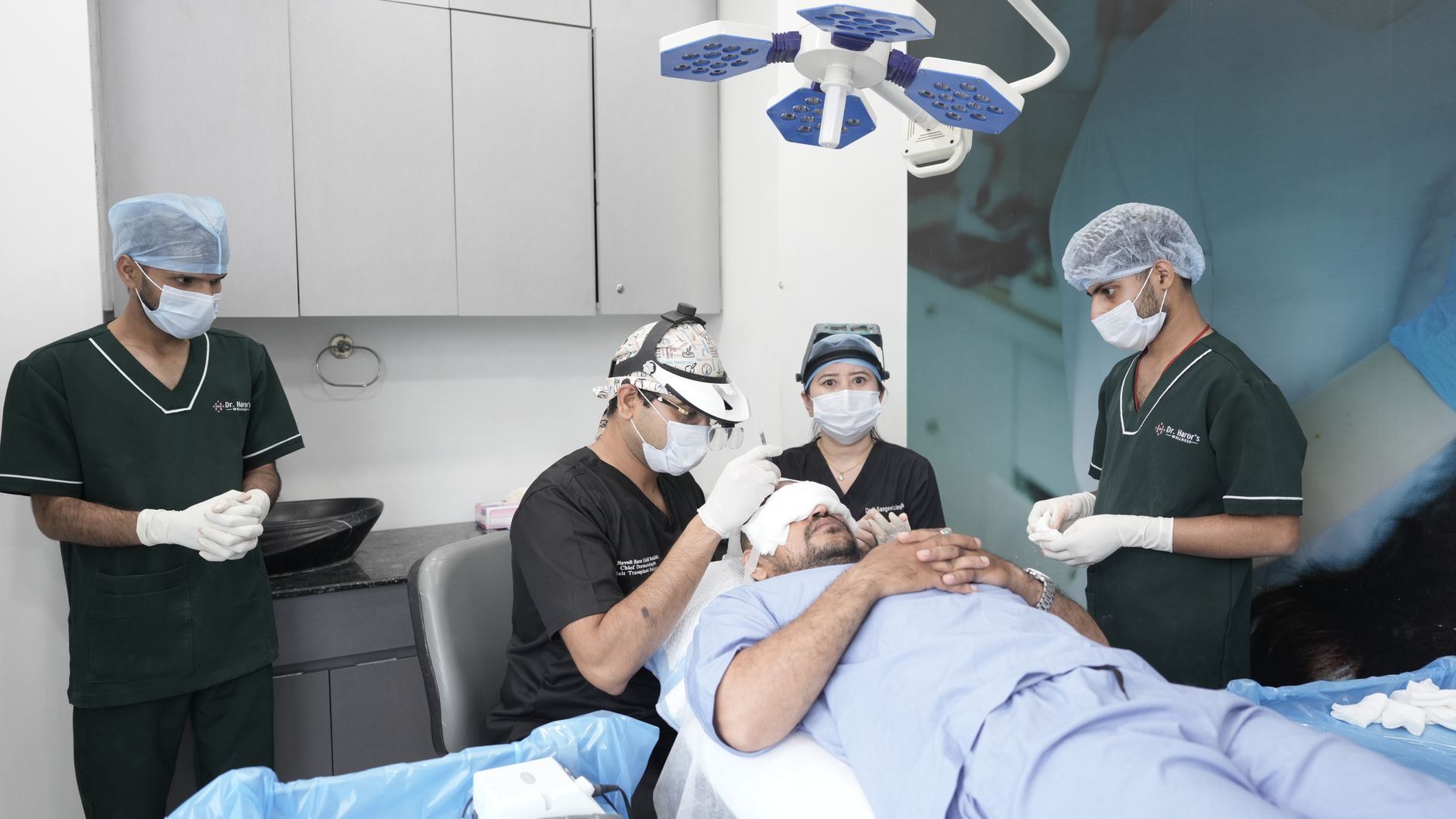
The temples are one of the most delicate areas to transplant. The hair here is fine and lies almost flat against the skin, pointing downward and slightly back, so grafts must be placed at acute angles and low density to avoid an unnatural, tufted look. Single-hair grafts are used along the leading edge for a feathered result.
Temple recession versus a receding hairline
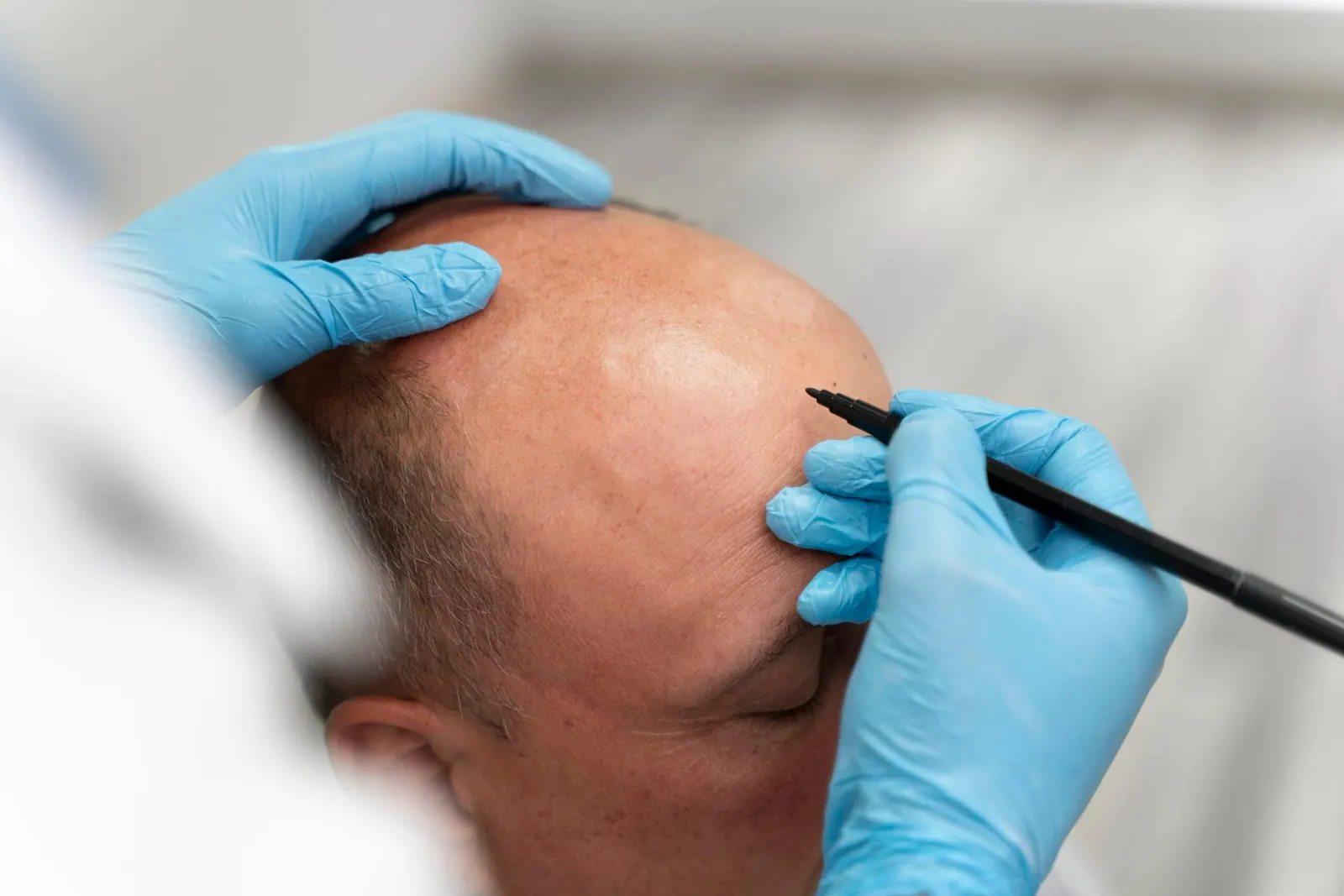
It helps to know whether your concern is the temple points specifically or a broader receding hairline, because the plan differs. When only the temple corners have receded, a focused restoration can reframe the face with relatively few grafts. When the whole frontal hairline has moved back, the temples are usually rebuilt as part of a larger hairline design, so the corners and the central hairline flow together naturally rather than being treated in isolation.
Recovery and results after temple work
Because temple sessions are usually small, downtime tends to be short — some redness and tiny scabs around the corners for about a week. As with any transplant, the placed hairs shed within the first weeks before regrowing, and the softening effect on your hairline builds gradually over the following months.
Payment is taken in euros; dollar amounts are approximate.


Where to go next
 GuideHairline Transplant in TurkeyHairline design and restoration — a natural,…Read the guide
 GuideHair Transplant in Turkey: Costs, Techniques and ResultsFUE, DHI and Sapphire FUE hair transplants i…Read the guide Free toolHair Graft CalculatorEstimate how many grafts you may need with o…Try the tool
 Patient journeyFree Hair AnalysisShare a few photos and our patient team will…What to expect PricingHair Transplant Cost in TurkeyWhat a hair transplant really costs in Turke…See the numbers
Common questions
How many grafts does a temple transplant need?
Will the temple result look natural?
How much does a temple hair transplant cost?
Will a temple transplant lower my hairline corners?
Can temples be done on their own?
Is a temple transplant permanent?
Can women have a temple transplant?
Start with a free hair analysis
Share a few photos and our patient team will come back with an indicative plan, the technique that fits and the package that applies — no obligation.