
Hair PRP in Turkey
PRP (platelet-rich plasma) is a concentrate made from a small sample of your own blood and injected into the scalp to support the hair you already have. Natural Hair Turkey recommends it after a hair transplant; how many sessions you need is set at your assessment. A session costs €100 (approx. $115). Individual results vary.
PRP does not create new follicles and does not replace a transplant. This page explains where it fits alongside a transplant, what one session involves and who should not have it.
What PRP for hair is — and what it cannot do
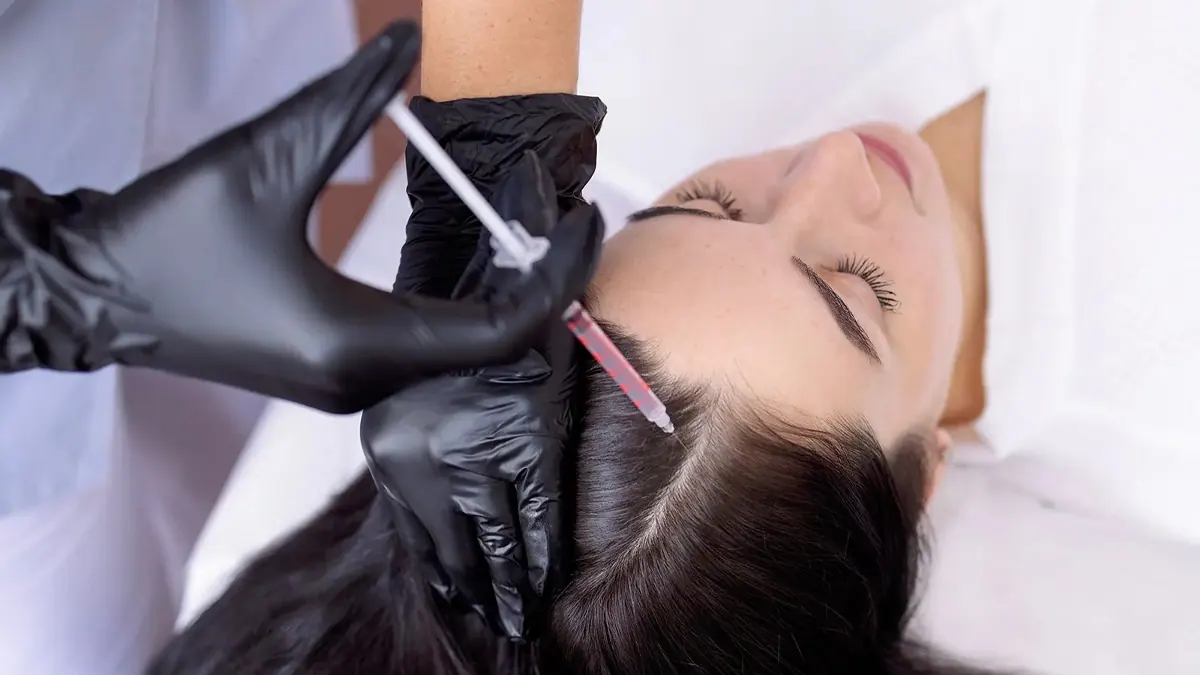
To prepare PRP, a small amount of blood is taken from your arm and spun in a centrifuge so that the platelets separate from the rest of the blood. The platelet-rich part of the plasma is then injected into the areas of the scalp where hair is thinning. Platelets carry growth factors, which is why PRP is being studied as a way to support hair follicles.
What PRP cannot do matters just as much. It does not create follicles where they have been lost, so it cannot fill a bald area, and it does not stop pattern hair loss for good. It works on the hair that is still there, which is why it is discussed alongside a transplant or medical treatment rather than instead of them.
PRP after a hair transplant
Natural Hair Turkey recommends PRP after a hair transplant. The aim is to support the existing, non-transplanted hair around the grafts, which can keep thinning after the procedure, and the condition of the scalp as it heals. The transplanted grafts grow on their own timeline, with or without PRP.
When the first session takes place, how many follow, and how far apart they are depends on your hair loss, your scalp and how you heal; it is set at your assessment rather than taken from a fixed schedule. PRP sessions are not part of the transplant packages and are paid per session. What to expect from the grafts themselves, month by month, is covered in the recovery timeline, and other options after a transplant in treatments after a hair transplant.
PRP supports; it does not decide the result of a transplant. The planning, the handling of the grafts and your aftercare do.
What the evidence says so far
Studies of PRP for pattern hair loss, many of them small, suggest it can improve hair density and thickness in some people. Results differ between studies and between patients, the way PRP is prepared and injected is not standardised, and the improvement usually needs repeated sessions to last. Dermatology and hair restoration societies describe it as a promising option that still needs larger, better-designed studies.
Evidence for PRP given alongside a hair transplant is more limited still. That is why we recommend it as support for the hair around the grafts, not as something that makes the transplant work.
One PRP session, step by step
- A small blood sample is taken from a vein in your arm.
- The sample is spun in a centrifuge to separate the platelet-rich plasma.
- The scalp is cleaned; the injection areas are numbed if needed for comfort.
- The PRP is injected in small amounts across the thinning areas.
- You can usually go back to your day afterwards; the scalp may feel tender for a short time.
Mild soreness, redness or small bruises at the injection sites are the most common reactions and usually settle within days. Your clinic tells you when you can wash your hair and when to avoid strenuous exercise.
How many sessions, and how far apart?
There is no number that fits everyone. The number of PRP sessions and the time between them are set at your assessment, based on your hair loss, how it has developed and whether you have had a transplant. Be cautious of anyone who promises a fixed course with a guaranteed result.
How much does PRP cost?
One PRP session costs €100 (approx. $115). Sessions are not included in the hair transplant packages, so the total depends on how many sessions your plan includes. The hair transplant cost page lists what the packages do and don't cover.
Payment is taken in euros; dollar amounts are approximate.
Who should not have PRP
PRP uses your own blood, but it is still a medical treatment. It is usually not given, or only after medical advice, in these situations:
- Platelet or bleeding disorders, or a very low platelet count.
- Medicines that affect blood clotting, unless your doctor agrees they can be paused or managed.
- An active infection or skin condition on the scalp.
- Some serious illnesses, including active cancer or a severe chronic disease.
- Pregnancy or breastfeeding.
Tell the team about any medicines, supplements and health conditions before the session. Hair loss that has a medical cause, such as a thyroid problem or iron deficiency, needs that cause looked at first.
PRP for hair: your questions
Is PRP recommended after a hair transplant?
How many PRP sessions will I need?
Does PRP hurt?
Is PRP the same as mesotherapy?
Does PRP make hair grow back?
Is PRP included in the transplant packages?
Can I have PRP instead of a hair transplant?
Sources & further reading
- American Academy of Dermatology
- International Society of Hair Restoration Surgery (ISHRS)
- British Association of Dermatologists
- PubMed (peer-reviewed research database)
This content is for general information only and does not replace a personal medical consultation. Any procedure carries risks that are discussed during your assessment; individual results vary.
Related pages
 GuidePost-Transplant Support TreatmentsSupportive treatments that may be recommende…Read the guide
 GuideHair Mesotherapy in TurkeyScalp mesotherapy as a supportive treatment…Read the guide
 GuideHair Transplant in Turkey: Costs, Techniques and ResultsFUE, DHI and Sapphire FUE hair transplants i…Read the guide GuideHair Restoration Treatments in TurkeyEvery hair restoration option in one place —…Read the guide
 GuideFemale Hair Transplant in TurkeyHair transplants for women — diffuse thinnin…Read the guide
 GuideAfro Hair Transplant in TurkeyAfro-textured hair transplants require speci…Read the guide
 GuideBeard Transplant in TurkeyBeard and moustache restoration with FUE/DHI…Read the guide
 GuideEyebrow Transplant in TurkeyEyebrow restoration for thin, over-plucked o…Read the guide
Want to know if PRP fits your plan?
Send a few photos for a free hair analysis. If you are planning a transplant, we explain how PRP fits around it and how many sessions are likely — with no obligation.