

Afro Hair Transplant in Turkey
An afro hair transplant uses the same FUE method as any other, but tightly curled hair also curls under the skin, so each follicle is harder to take out without cutting it. Extraction is slower and more careful, your scarring history is discussed first, and the hairline is designed for curl. Individual results vary.
What changes under the skin, how curled follicles are taken out intact, why traction alopecia and keloid history come up at the assessment, how curl affects density and the hairline, and how to look after your scalp afterwards.

What makes afro-textured hair different under the skin?
A hair transplant moves follicles from the back and sides of the scalp to an area that has thinned. With straight hair, the follicle runs in a fairly straight line beneath the skin, so the angle of the hair you can see shows where the root sits. With afro-textured hair, the follicle itself is curved, so the root can lie well away from the point where the hair comes out.
| Straight hair | Afro-textured hair | |
|---|---|---|
| Shape of the follicle | Mostly straight below the skin | Curved, often in a C or hook shape |
| Does the visible angle show the root? | Usually, quite closely | Only partly; the root curves away |
| Effect on extraction | A punch can follow a straight line | A punch that goes too deep or straight can cut across the curve |
| Look above the scalp | Lies flat in one direction | Coils back over the skin |
Cutting across a follicle during extraction is called transection. Hair restoration literature, including studies indexed on PubMed, describes curved follicles as more prone to it, and a graft whose follicle has been cut is less likely to grow well. That is the main reason afro hair is handled differently. The curl is not an obstacle to a transplant in itself; it changes how the grafts have to be taken out.
How are curled follicles taken out intact?
Afro hair is extracted with the same FUE principle, one follicular unit at a time. What changes is the pace and the attention given to each graft. In practice that usually means:
- The donor hair is trimmed short but not shaved to the skin, so the direction each hair leaves the scalp can still be seen.
- The punch is chosen for curled hair and only goes as deep as needed to free the top of the unit, which is then eased out gently instead of pulled.
- Work goes more slowly than with straight hair, and grafts are checked under magnification for cut follicles.
- Sometimes a small test area is taken first, to see how your follicles curve and how intact the grafts come out before the full plan is set.
- Extraction is spread evenly across the donor area, so the back still looks full when the hair is cut short.
Both manual and motorised punches are used for this; the device matters less than how carefully it is used and how often grafts are checked. Because the work is slower, an afro session may move fewer grafts in a day than a straight-hair session of the same length. The general mechanics of FUE are explained on the FUE hair transplant in Turkey page; the grafts can then be placed with openings made first or with an implanter pen, as described on the DHI hair transplant in Turkey page.
Before you book anywhere, it is fair to ask how a team adapts its extraction for afro hair and whether it can show afro-textured cases. The hair transplant clinic checklist covers the other questions worth asking.
Why is hair lost at the hairline and edges?
The cause of the hair loss decides whether a transplant can help, so it comes before any graft plan. Three causes come up often in people with afro-textured hair.
Hair loss from styles that pull on the roots for a long time, such as tight braids, cornrows, weaves, extensions or tight ponytails. The American Academy of Dermatology notes that it is common in people who wear these styles, that hair can regrow if the pulling stops early, and that long-standing traction can make the loss permanent.
Androgenetic alopecia, the most common type of hair loss according to the NHS: a receding hairline and thinning at the crown in men, and thinning over the top of the head in women. It affects afro-textured hair as it does any other hair type.
A scarring hair loss that usually starts at the crown and spreads outwards. The AAD describes it as most common in women of African descent and advises seeing a dermatologist early, because scarring hair loss destroys follicles. It needs diagnosis and treatment before a transplant is considered at all.
A transplant can sometimes restore a hairline lost to traction alopecia, but only once the loss is permanent and the pulling has stopped; otherwise the new hair is exposed to the same strain. Where the cause is unclear, or the scalp is itchy, tender or scaly, a dermatologist's assessment comes first. The hair restoration in Turkey overview sets out the non-surgical options alongside a transplant.
Why are you asked about keloids and raised scars?
- Any raised or growing scars after ear piercings, cuts, acne or earlier surgery
- Keloids in parents, brothers or sisters
- Earlier hair transplants and how the donor area healed
- Bumps or scarring on the back of the neck from close shaving
A keloid is a raised scar that grows beyond the edges of the original wound; a hypertrophic scar is raised but stays within it. The NHS and the AAD list darker skin, a previous keloid and a family history of keloids among the things that make keloids more likely, and note that they can form after small skin injuries, including piercings and surgery. Every FUE extraction leaves a tiny wound, so the question matters for afro hair transplants.
That is why your scarring history is asked about at the assessment, and why it helps to bring it up yourself if you are unsure. Useful details include:
A history of keloids does not decide the answer on its own, but it changes the conversation. In some cases a small test area is suggested so healing can be watched over several months, although a test that heals well cannot fully rule out a keloid later; in others a transplant is not advised. Individual results vary.
How full can curly hair look after a transplant?
How full an area looks depends on more than the number of grafts. Hair type, curl, length and the contrast between hair and skin colour all change how much scalp shows, which is why two plans with the same graft count can look quite different. How your own hair is likely to look is discussed at the assessment.
Curl does not mean the donor area holds more follicles: how many grafts it can spare varies from person to person and is measured at the assessment. And how full it looks depends on hair length and style; close-cropped hair shows the scalp more than longer hair does. Photos of consented cases are collected on the afro hair transplant before and after page. Individual results vary.
How is an afro hairline designed?
A natural hairline is irregular, soft at the front edge and set at an angle that matches the hair around it. With afro hair a few points carry extra weight:
- Angle: grafts set too upright make curled hair stand away from the scalp, which can look tufted. A low angle lets the curl lie back the way it would grow.
- Spacing: the coils of neighbouring grafts interlock, so even spacing matters more than packing grafts tightly in one spot.
- Single-hair grafts at the very front give a softer edge; larger units go behind them for body.
- Shape: the aim is to follow the line your own hair once had, which old photos can show, rather than a standard template.
- Edges and temples lost to traction are rebuilt with fine grafts that follow the original growth direction.
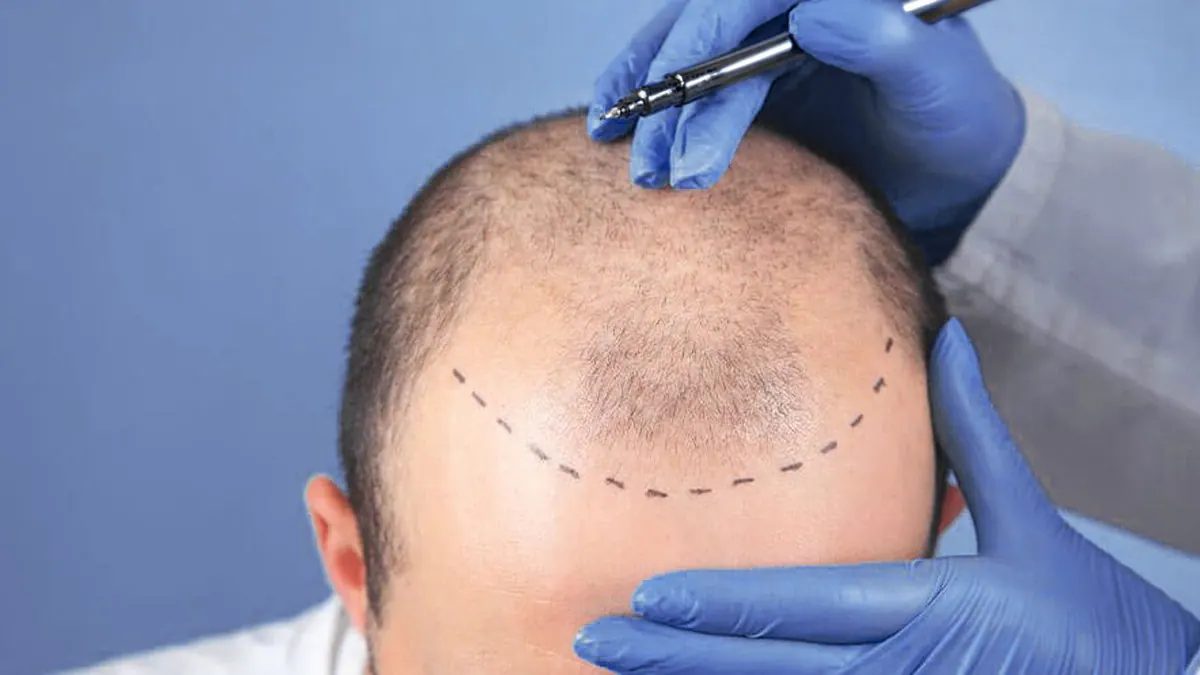
The line is drawn on the scalp and agreed with you before the day begins, and it is kept at a height that still looks right if hair loss continues. The hairline transplant page explains hairline design in more detail, and the female hair transplant in Turkey page covers thinning edges and hair loss in women.
Is an afro hair transplant right for you?
A transplant moves existing hair; it does not create new follicles or stop hair loss elsewhere. Whether it makes sense depends on where you are now.
| Your situation | What usually comes first |
|---|---|
| Traction loss and you still wear tight styles | Easing the pulling, then waiting to see what regrows |
| A scarring condition such as CCCA, or an unexplained itchy or sore scalp | Diagnosis and treatment by a dermatologist |
| Pattern hair loss that is still changing quickly | A talk about medical treatment and a longer-term plan |
| A previous keloid or raised scar | A detailed scarring history at the assessment, sometimes a test area |
| Stable loss with a healthy donor area | A graft plan and hairline design for your hair |
The quickest way to find out which row fits is to send photos of your hairline, crown and donor area for a free hair analysis. Anything specific to your case, from suitability to the number of grafts, is confirmed at the assessment.
How do you look after your scalp and hair afterwards?
You leave with written aftercare instructions, and they come first. In general, the early weeks are about protecting the grafts while the small wounds close: gentle washing exactly as shown, no scratching or picking at crusts, and no pressure on the treated area.
For afro hair, styling is the part that needs most patience. Braids, cornrows, weaves, extensions, tight wigs and chemical relaxers or dyes all put strain or chemicals on a healing scalp, so wait until your aftercare instructions say they are safe again. Keep heavy oils and styling products off the grafts too, until you are told otherwise.
Over the long term, looser styles protect both the transplanted hair and the hair you already have; dermatology bodies such as the AAD advise changing tight styles regularly to prevent traction alopecia. On darker skin, the AAD notes that inflamed skin can heal with darker or lighter patches, so sun protection and patience help while the scalp settles.
New growth usually starts from about month 4, and much of the result shows by 9–12 months; the hair transplant timeline covers each stage.
What does an afro hair transplant cost with Natural Hair Turkey?
An afro hair transplant costs one of our three package prices, between €1,600 and €2,100 (approx. $1,850–$2,400), for up to 5,000 grafts — the same as for every other hair type and technique, with no extra charge for slower extraction. The hair transplant cost in Turkey page shows what each package includes.
Payment is taken in euros; dollar amounts are approximate.
Afro hair transplant: your questions
Does an afro hair transplant use a different technique from standard FUE?
I have had a keloid before. Can I still have a hair transplant?
Can a transplant help with CCCA?
Will the donor area show if I keep my hair very short?
Can a hair transplant restore edges lost to braids or weaves?
Will my transplanted hair grow back curly?
When can I wear braids or a weave again after an afro hair transplant?
Sources & further reading
- American Academy of Dermatology
- NHS (United Kingdom)
- British Association of Dermatologists
- International Society of Hair Restoration Surgery (ISHRS)
- PubMed (peer-reviewed research database)
This content is for general information only and does not replace a personal medical consultation. Any procedure carries risks that are discussed during your assessment; individual results vary.
Related pages
 TechniqueFUE hair transplantHow FUE takes grafts one by one, how much yo…How it works
 GuideHairline transplantHairline design and restoration — a natural,…Read the guide
 GuideFemale hair transplantIs a hair transplant right for you as a woma…Read the guide GuideBeard Transplant in TurkeyBeard and moustache restoration with FUE/DHI…Read the guide GuideEyebrow Transplant in TurkeyEyebrow restoration for thin, over-plucked o…Read the guide
 GuideCrown Hair Transplant in TurkeyWhy the crown's whorl takes many grafts and…Read the guide GuideTemple Hair Transplant in TurkeyTemple hair transplant in Turkey: rebuilding…Read the guide
Want to know what a transplant could do for your hair?
Send a few photos of your hairline, crown and donor area for a free hair analysis. We reply with an estimated graft range, notes on your hair type and scarring questions, and the package that applies — with no obligation to book.