
Hair Transplant Graft Planning
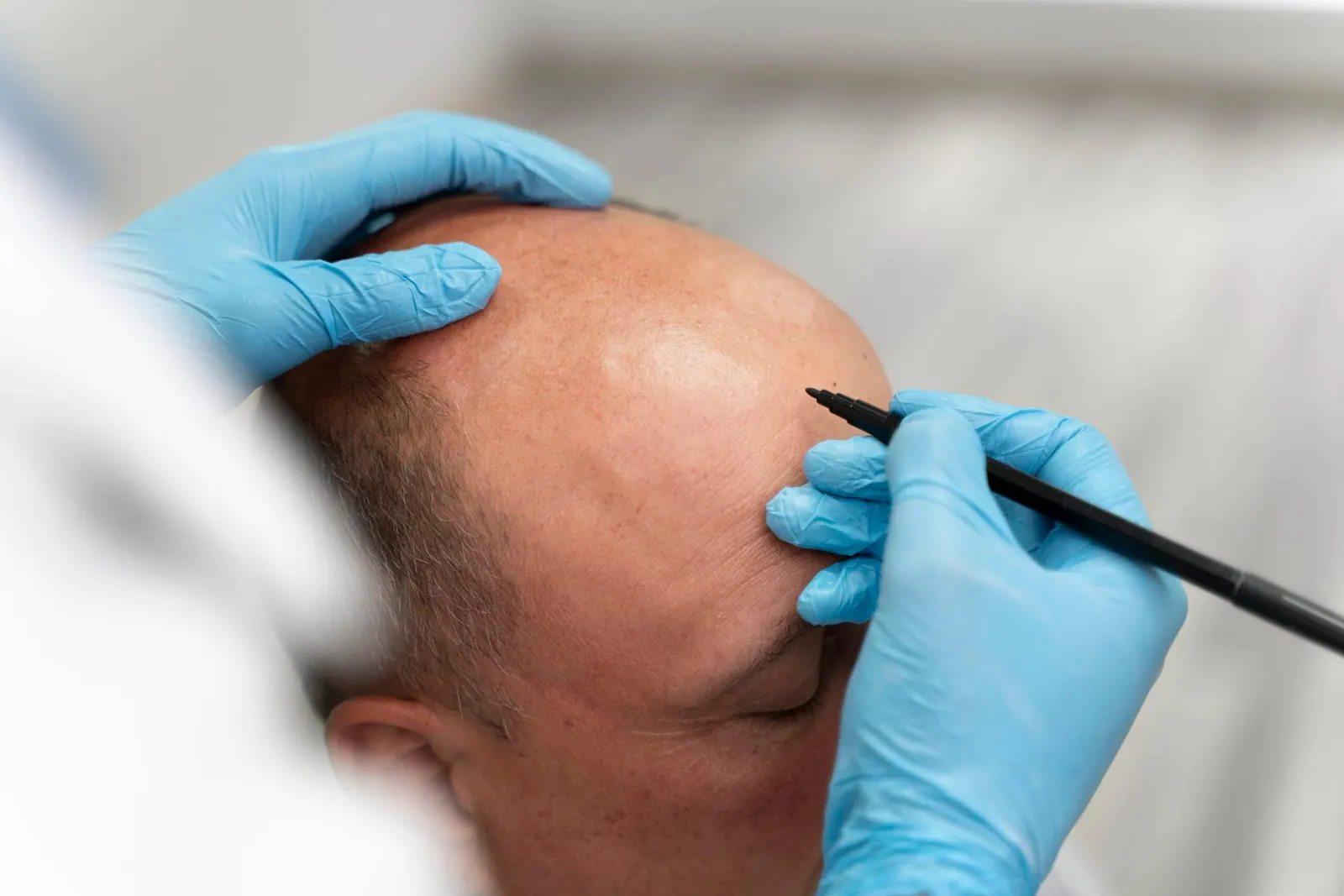
Graft planning decides how many follicular units are transplanted and where they go. Surgeons balance your available donor supply against the size of the area to cover, then distribute grafts by zone — a denser hairline, blended mid-scalp and a considered approach to the crown. The aim is a natural, durable result rather than the highest possible number, and we confirm the plan for your case.
How graft numbers are decided
The graft count is not a target you maximise — it is a match between what your donor area can safely give and what the recipient area needs. The surgeon estimates the follicular units available in the safe donor zone, measures the area to be covered, and sets a number that improves density meaningfully while keeping the donor area looking natural for the long term. Over-harvesting is avoided precisely because donor supply does not regenerate.
How grafts are distributed
Distribution matters as much as the total. Grafts are not spread evenly; they are concentrated where they create the most natural impact and blended so there are no visible edges.
Grafts, hairs and follicular units explained
It helps to know what a "graft" actually is, because graft counts and hair counts are not the same thing. A graft is a naturally occurring follicular unit — a small cluster that grows one to four hairs. So a plan of, say, 3,000 grafts typically yields noticeably more than 3,000 individual hairs. When you compare quotes, check whether a clinic is quoting grafts (follicular units) or hairs, as the two numbers are very different.
Protecting the donor area for the long term
Good planning looks after the donor area as much as the recipient area. The safe donor zone at the back and sides holds a finite number of follicular units, and it does not regenerate what is harvested. Taking too many at once, or too many over repeated procedures, can leave the donor zone looking thin — which is why careful planning is conservative and may keep some supply in reserve for the future rather than maximising a single session.
Planning across one or more sessions
When the area is large relative to donor supply, the surgeon may prioritise the zones that matter most to you first, or plan the work across more than one session. This protects the donor area and gives a natural result rather than thin coverage stretched too far. The final numbers and staging are confirmed at a personal assessment, and individual results vary.
| Area | Typical graft range | Planning note |
|---|---|---|
| Hairline / frontal zone | 1,000–2,500 | Density here frames the face |
| Mid-scalp | 1,000–2,000 | Blends front to crown |
| Crown / vertex | 1,500–3,000+ | Whorl pattern can need more |
| Full pattern (multi-zone) | Often 3,000–5,000+ | May be staged over sessions |
Where to go next
 Patient journeyFree Hair AnalysisShare a few photos and our patient team will…What to expect Free toolHair Graft CalculatorEstimate how many grafts you may need with o…Try the tool
 GuideHairline Transplant in TurkeyHairline design and restoration — a natural,…Read the guide Free toolNorwood Scale CalculatorIdentify your hair loss stage on the Norwood…Try the tool Patient journeyHair Transplant Process in TurkeyFrom consultation and graft planning to oper…What to expect GuideHair Transplant Consultation in TurkeyWhat happens in a hair transplant consultati…Read the guide
Common questions
How do surgeons decide how many grafts I need?
Why is the crown sometimes planned separately?
How many hairs are in 3,000 grafts?
Are grafts and hairs the same when comparing quotes?
Is more grafts always better?
Can everything be done in one session?
How many grafts can be taken from the donor area?
Start with a free hair analysis
Share a few photos and our patient team will come back with an indicative plan, the technique that fits and the package that applies — no obligation.