
DHI Hair Transplant Before & After
DHI (Direct Hair Implantation) uses an implanter pen that places each graft in one motion, giving the surgeon fine control over the angle, depth and spacing of every hair — which is why DHI before-and-after photos are often used to show refined hairlines and dense-packed zones. Honest galleries pair each set with the graft count, the technique, the donor situation and the exact months between photos, and show the same person under similar lighting. Early regrowth is usually visible from around month four, with a fuller picture nearer 9–12 months. These are consented example cases, not promises — individual results vary and we confirm what is realistic for you at a personal assessment.
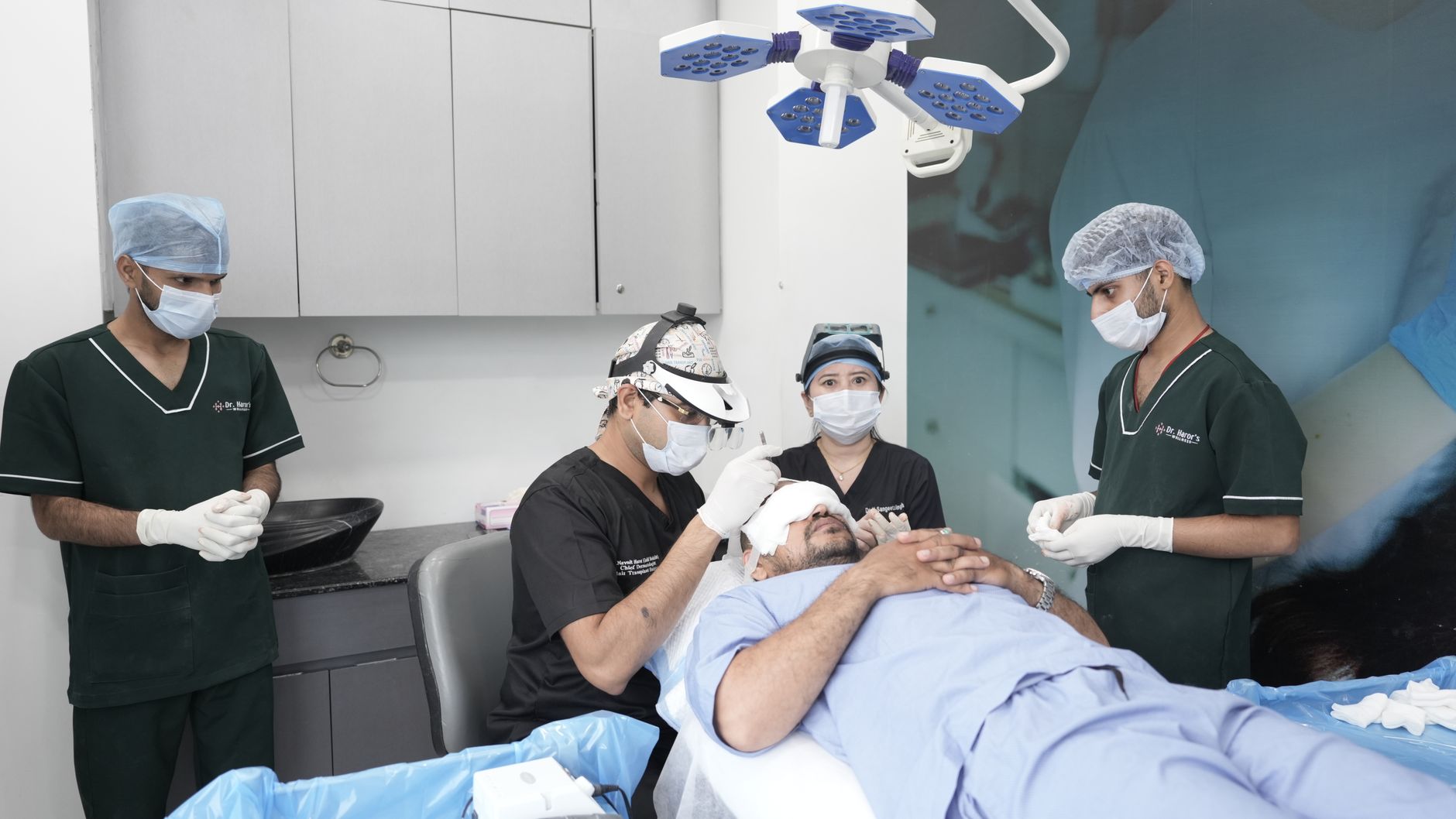 Natural Hair TurkeyIstanbul · Personal assessment
Tap a case to compare; individual results vary.
What the implanter pen actually changes in a photo
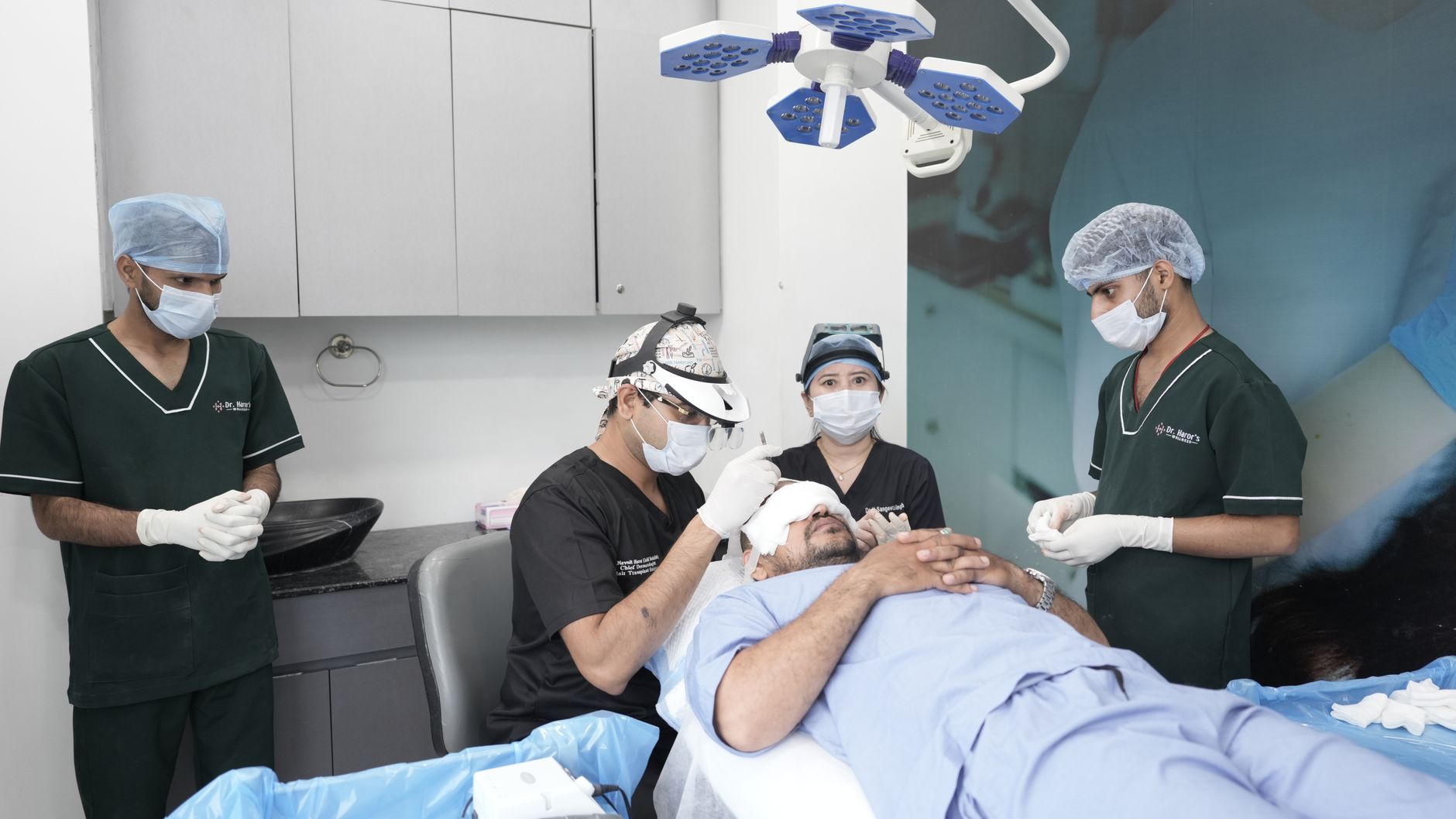
With DHI the surgeon loads each graft into a pen and places it directly, rather than cutting channels first and inserting grafts afterwards. In before-and-after images this control tends to show up at the front — the way single-hair grafts sit at the very edge of a hairline, the irregular, non-straight border that reads as natural, and the direction each hair points as it emerges. When you look at a DHI set, study the leading edge under magnification rather than the overall density alone.
The same fine placement can help with density inside a defined area, because grafts can be set close together at a chosen angle. That said, how packed an area can safely be depends on donor supply, scalp condition and blood flow, not on the technique alone. A good gallery will make the trade-offs visible rather than only showing the most flattering angle.
Reading a DHI timeline honestly
A useful before-and-after is really a sequence: the day of the procedure, the first weeks while the area settles, the shedding phase where transplanted hairs often fall before they regrow, and then the gradual fill-in. Photos labelled only "before" and "after" with no month markers tell you very little, because a 6-month image and a 14-month image can look quite different for the same person.
Ask what month each frame represents. Early frames may look thin or patchy and that is usual; most of the visible change tends to arrive between months six and twelve, with texture and maturity continuing beyond that. If a set jumps straight from a shaved scalp to a full result with nothing in between, treat it with healthy caution.
Unshaven and partially shaven DHI cases
Because DHI places grafts through small openings without pre-cut channels, it is often discussed alongside unshaven or partially shaven approaches, where the recipient area or surrounding hair is kept longer. In photographs this can make the immediate post-procedure stage look less dramatic, which some patients prefer for privacy. Suitability is limited and depends on the number of grafts, the area and your existing hair — we confirm whether an unshaven plan is sensible for your case.
When you review unshaven examples, check that the "before" and the healed result are genuinely the same person and area, and that longer surrounding hair is not doing most of the visual work. Coverage that relies mainly on existing hair styled over the zone is not the same as coverage from regrown grafts.
How to evaluate any before-and-after gallery
Photographs are evidence, not proof, and they are only as honest as their labelling. Before you draw conclusions from a DHI gallery, look for a few basic things so you are comparing like with like.
No single case predicts your outcome — your pattern, donor density, hair characteristics and goals decide what is achievable. The most reliable thing a clinic can offer is not a striking photo but a clear, personal assessment with indicative expectations, not guarantees.
DHI density in photos: what dense packing can and can't promise
DHI is often shown off with tightly packed, high-density frames, and the implanter pen does give a surgeon fine control over how close grafts sit. But a photograph of dense coverage reflects three things at once: the technique, the graft count placed over that area, and — crucially — the donor supply and blood flow that made the density safe. Reading dense packing as a property of DHI alone is a common misunderstanding.
How dense an area can go is a clinical limit, not a slider. Push beyond what the scalp's circulation supports and graft survival can suffer, which no single flattering frame will reveal. This is why honest DHI galleries pair a dense result with a stated graft number, and why a surgeon sets a realistic density for your case at assessment rather than promising a figure from a photo. Individual results vary.
Request your free hair analysis
Share a few details and photos; our patient team replies with an indicative graft count, the technique and the package that applies. Your data is handled per our privacy policy and used only for your assessment.
Where to go next
 TechniqueDHI Hair Transplant in TurkeyDirect Hair Implantation (DHI) with implante…How it works ResultsHair Transplant Before & After in TurkeyConsented before-and-after case examples by…See results CompareFUE vs DHI Hair TransplantA side-by-side comparison of FUE and DHI — t…Compare techniques
 GuideNo-Shave Hair Transplant in TurkeyA no-shave hair transplant leaves surroundin…Read the guide PricingHair Transplant Cost in TurkeyWhat a hair transplant really costs in Turke…See the numbers
Common questions
When do DHI results usually start to show in photos?
Can I have a DHI transplant without shaving my head?
Do these photos show what my result will look like?
How far apart should genuine DHI before-and-after photos be?
Is DHI better than FUE for the hairline in before-and-after photos?
How can I tell if before-and-after photos are genuine?
Does DHI give denser results than FUE in before-and-after photos?
Start with a free hair analysis
Share a few photos and our patient team will come back with an indicative plan, the technique that fits and the package that applies — no obligation.