
DHI Hair Transplant in Turkey
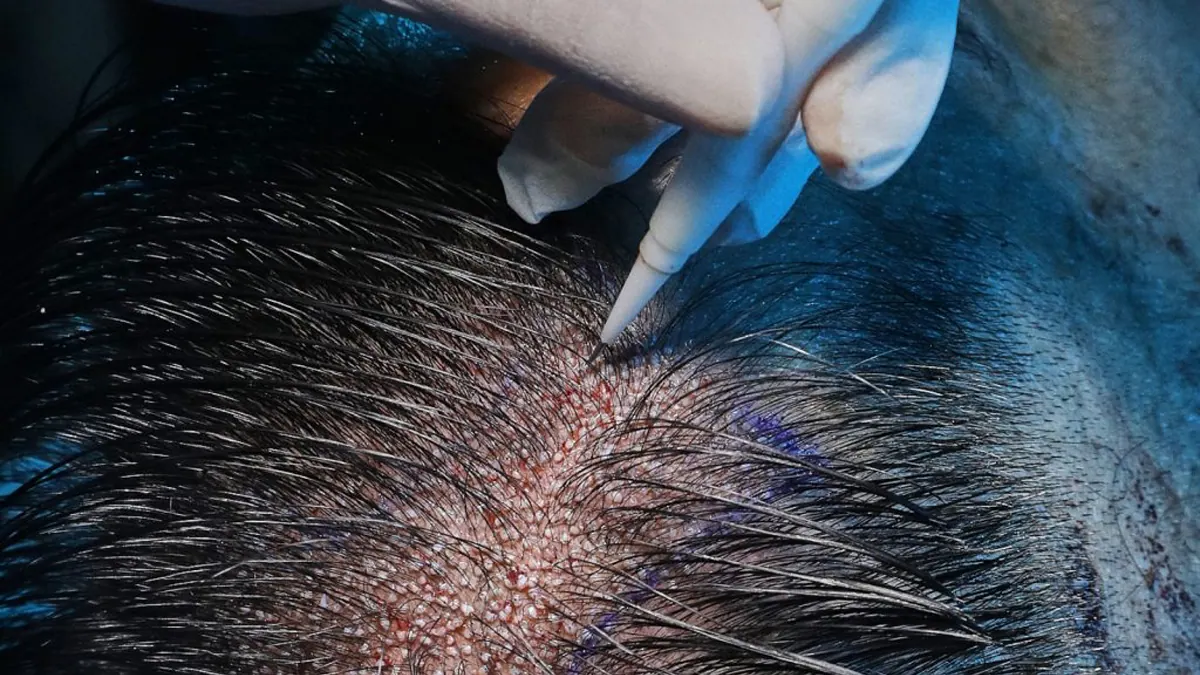
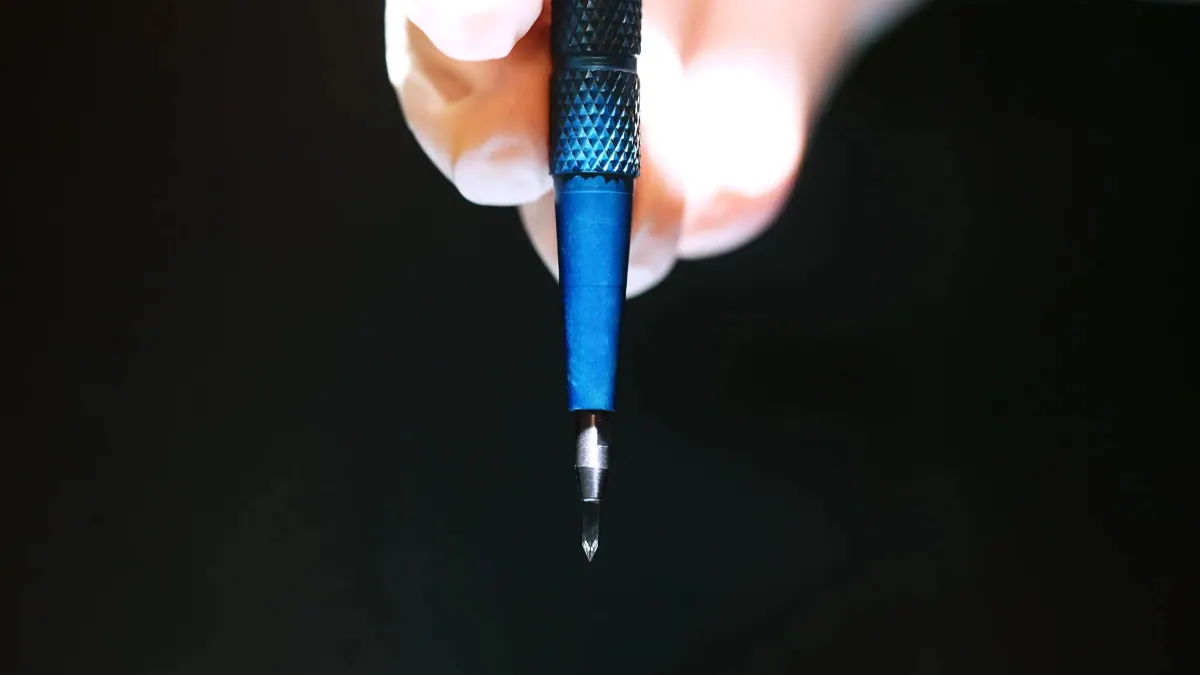
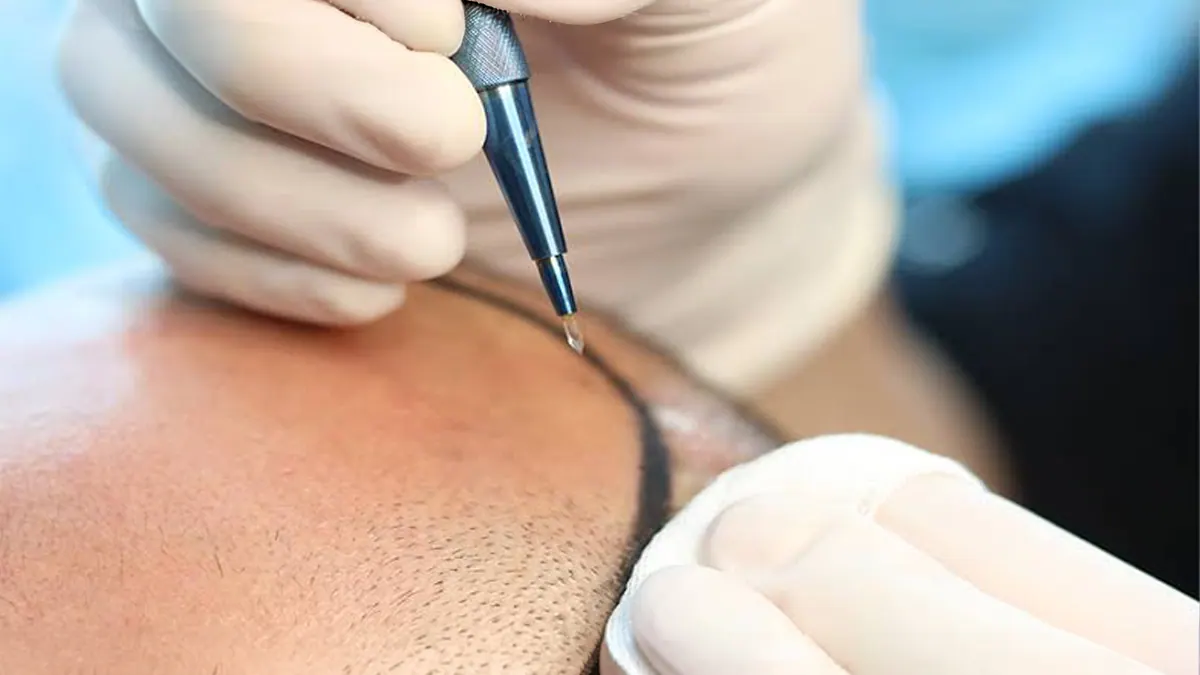
DHI, direct hair implantation, takes the grafts one by one as in FUE and then places each one with a pen-shaped implanter that opens the skin and sets the graft in a single motion. That gives fine control over angle and depth, most useful at the hairline and between existing hairs. Individual results vary.
How the implanter pen works, where its control makes a difference, what it does not change, how a DHI day runs, and how to decide between DHI and FUE.
What does the implanter pen do?
DHI changes only how the grafts are put in. They are taken from the donor area exactly as in FUE. In standard FUE, all the small openings in the thinning area are made first and the grafts are placed afterwards; in DHI, each graft goes in through its own opening at the moment it is made.
| Openings first (FUE) | Implanter pen (DHI) | |
|---|---|---|
| Opening the skin | All openings are made before placement | The pen's hollow needle opens the skin for each graft |
| Placing the graft | Each graft is set into a waiting opening with forceps | The graft is pushed out of the needle in the same motion |
| Angle and depth | Set when the opening is made | Set at the moment of placement, graft by graft |
| Pace | Efficient over large areas | Slower, as each graft is loaded into a pen |
The pens are often called Choi implanters, after the device the technique grew from. Several pens with needles of different sizes are used in turn, so the needle can match the size of each graft.
Where does DHI's control help most?
Single hairs at low angles, placed one at a time along an irregular front edge.
Density added in a thinning area without cutting the hair that is still there.
The pen reaches the skin between long hairs, which suits smaller unshaven sessions.
Because the angle, depth and direction are set as each graft goes in, DHI suits work where precision counts more than speed. The usual examples are a front hairline built from single-hair grafts, the corners at the temples, and adding density between hairs that are still there, where an opening made in advance could damage a neighbouring follicle.
It also lends itself to plans with little or no shaving, because the needle can reach the skin between longer hairs; see without shaving. For rebuilding the front, the hairline transplant page explains how the line itself is designed.
The same placement between existing hairs fits other small, clearly bounded areas where new hair has to blend into the hair around it: a parting or temples that have thinned in women who want to keep their length, or a scar within hair-bearing skin. Scar tissue brings limits of its own, which hair transplant on scars sets out.
What DHI does not change
DHI does not create new follicles or give you more donor hair: the number of grafts available is set by your donor area, just as in FUE. It does not change how the grafts grow either. The transplanted hairs shed and regrow on the same timeline as with any other technique.
It is also not automatically better than FUE. Placement method alone is not a known reason for better graft survival when both are done well, and for big areas the slower pace of DHI can be a disadvantage. The method is a tool; the planning and the care taken with every graft matter more.
Nor does it protect the hair you still have. The grafts come from the back and sides of the scalp, which pattern hair loss tends to spare, but the native hair around them can keep thinning, so a good plan allows for that hair as well; treatments after a hair transplant covers the options. The usual after-effects stay the same too: some swelling for a few days and patches of numbness that tend to fade over the following weeks. The wider hair transplant risks apply whichever method places the grafts.
If a quote presents DHI as more advanced or more natural in itself, ask what it will change for your hair specifically.
How does a DHI day run?
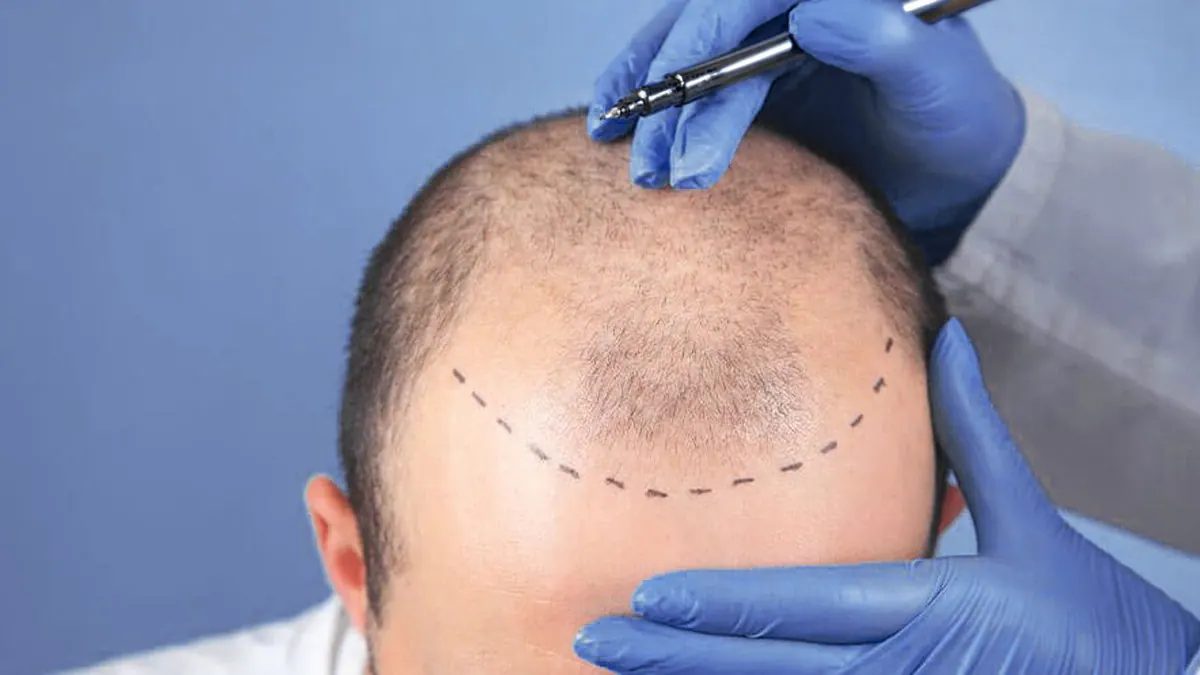
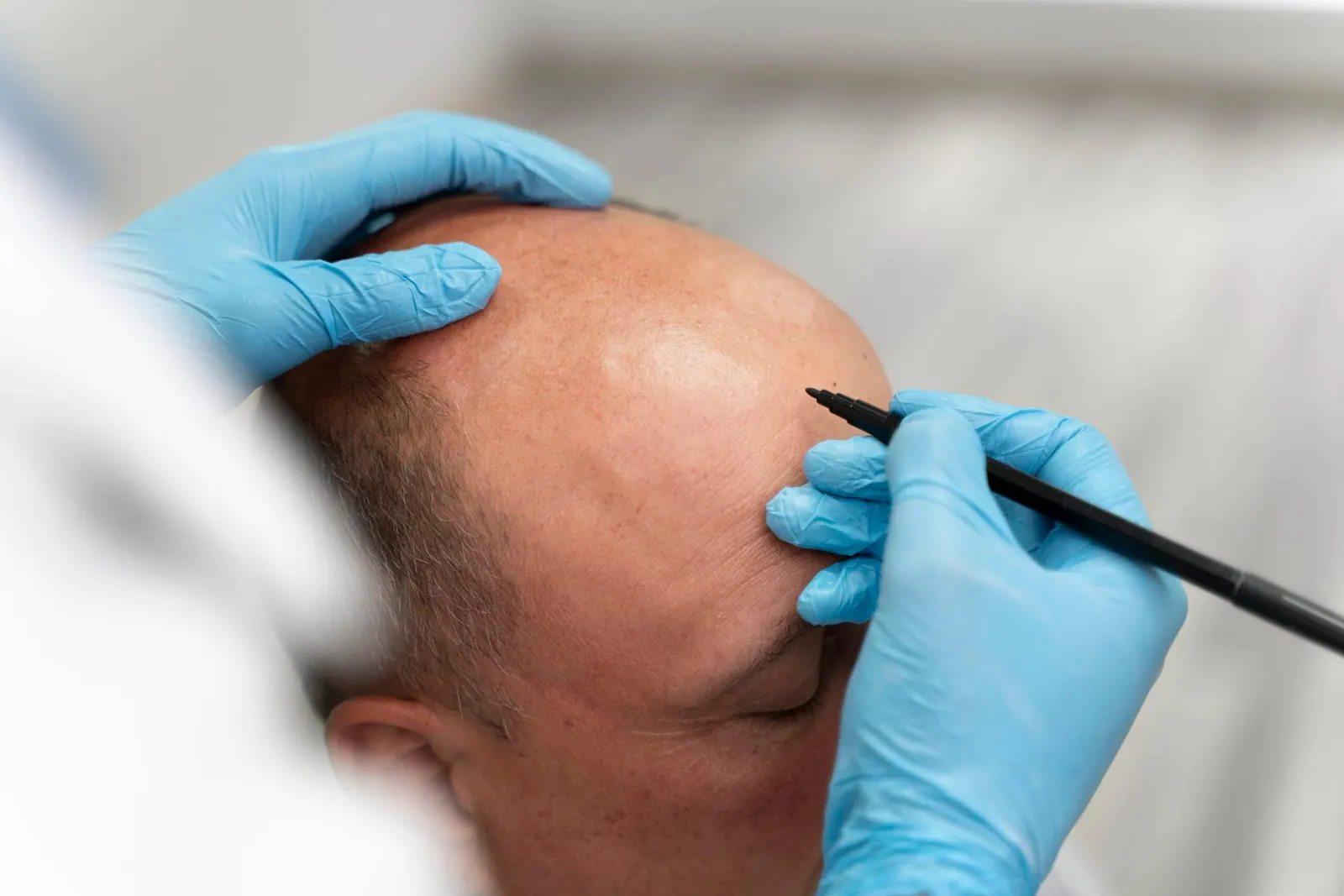
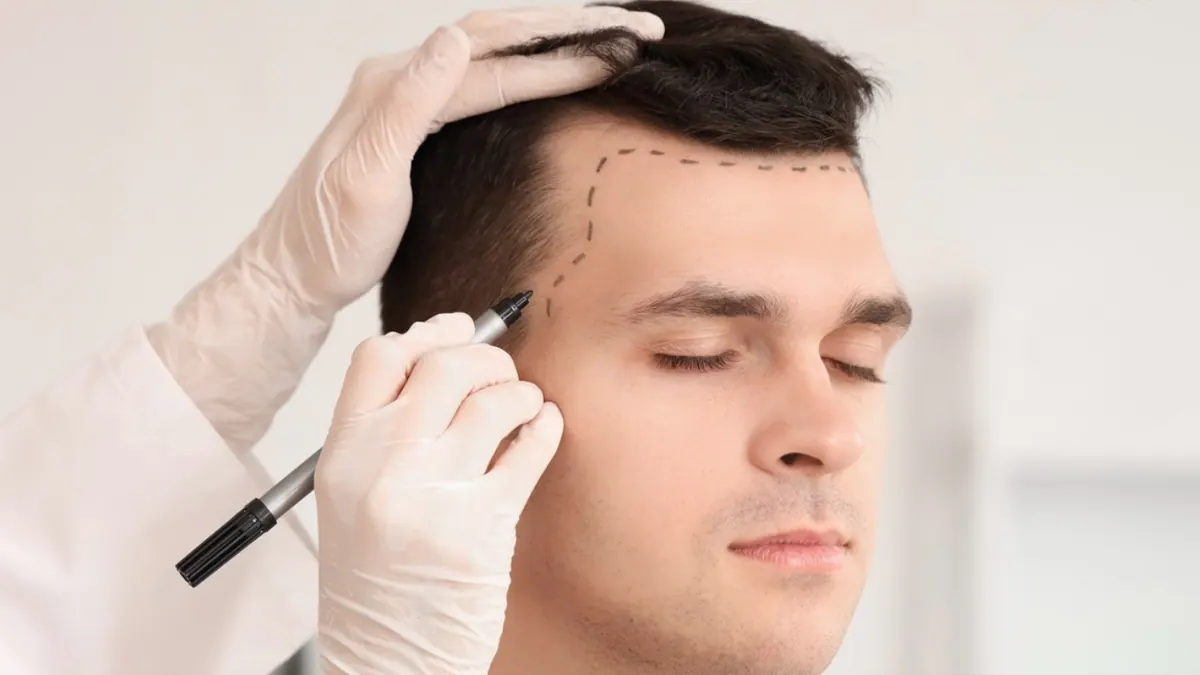
The day starts with the design: the area to treat and, for the front, the new hairline are drawn on the scalp and agreed with you. After local anaesthetic, the grafts are taken from the donor area one by one and kept in a holding solution. They are then loaded into the pens and placed. Most sessions take 6–8 hours, and you go back to your hotel the same day.
Because loading and placing go hand in hand, DHI work is organised so that grafts spend as little time out of the body as possible. Who loads the pens and who places the grafts differs between clinics; it is a fair question to ask at your consultation. How the implanter pen works, and the other instruments used, is covered in the equipment guide.
DHI or FUE — which suits you?
It depends on the area and the goal. DHI tends to suit precise, smaller work at the front and between existing hairs; standard FUE placement is often more efficient for large areas such as an advanced crown. Many plans combine both. Which one fits is recommended at your assessment, and you can ask why. The full comparison is on how FUE and DHI differ, and DHI against sapphire blades on DHI or Sapphire FUE. Our guide to hair transplant techniques sets all the methods side by side.
What happens after DHI?
Recovery is the same as after any FUE-based transplant: small crusts that usually clear within 1–2 weeks, shedding after a few weeks, new growth from about month 4 and much of the result by 9–12 months. The hair transplant recovery timeline covers each stage.
What does DHI cost with Natural Hair Turkey?
DHI costs the same as FUE and Sapphire FUE: one of three package prices, between €1,600 and €2,100 (approx. $1,850–$2,400), for up to 5,000 grafts. Some clinics charge more for DHI because the sessions take longer; when two quotes differ, compare the number of grafts and what is included before the technique name. Our guide to hair transplant cost in Turkey explains what each package covers.
Payment is taken in euros; dollar amounts are approximate.
DHI hair transplant: your questions
What does DHI stand for?
Can DHI be done without shaving?
How many grafts can DHI place in one day?
Do DHI results grow faster?
What is a Choi implanter pen?
Does DHI take longer than FUE?
Is DHI suitable for women?
Sources & further reading
- International Society of Hair Restoration Surgery (ISHRS)
- American Academy of Dermatology
- British Association of Dermatologists
- PubMed (peer-reviewed research database)
This content is for general information only and does not replace a personal medical consultation. Any procedure carries risks that are discussed during your assessment; individual results vary.
Related pages
 TechniqueFUE hair transplantHow FUE takes grafts one by one, how much yo…How it works
 GuideHairline transplantHairline design and restoration — a natural,…Read the guide
 GuideNo-shave hair transplantA no-shave hair transplant leaves surroundin…Read the guide
 CompareHair Transplant Techniques in TurkeyCompare FUE, DHI, Sapphire FUE and unshaven…Compare techniques
 TechniqueSapphire FUE Hair Transplant in TurkeySapphire FUE opens the graft channels with s…How it works PricingHair Transplant Cost in TurkeyWhat a hair transplant really costs in Turke…See the numbers
 Patient journeyFree Hair AnalysisShare a few photos and our patient team will…What to expect
Want to know whether DHI suits your hair?
Send a few photos of your hairline, crown and donor area for a free hair analysis. We reply with an estimated graft range, whether DHI, FUE or a combination fits, and the package that applies — with no obligation to book.