

Shock Loss After a Hair Transplant
Shock loss is the temporary shedding of hair after a transplant, usually in the first two to six weeks. The transplanted hairs fall out while the follicles beneath them stay in place and enter a resting phase before regrowing — and sometimes nearby existing hairs shed too. It looks alarming but is a normal, expected part of the cycle, not a sign of failure. Regrowth typically begins around month four; individual results vary.
What shock loss is
After a transplant the visible hair shaft is shed, but the follicle — the living structure that grows the hair — stays put in the scalp. It simply enters a resting phase before starting a new growth cycle. This shedding is what is meant by shock loss, and it is one of the most misunderstood parts of recovery because it can look like the transplant has fallen out.
Sometimes existing hairs around the transplanted area shed too, as a temporary response to the procedure. In the great majority of cases these also regrow. What you are seeing is a pause, not a loss.
Why it happens and why it's normal
The follicles are moved and the scalp goes through a healing response, which nudges hairs into their resting and shedding phase earlier than they otherwise would. It is expected and built into the standard growth timeline. Judging your result during this phase is misleading, because the meaningful growth comes later.
Shedding of existing hair around the grafts
It is not only the transplanted hairs that can shed. Sometimes native hairs surrounding the treated area also thin temporarily in response to the trauma of surgery — a phenomenon that can be more unsettling than the expected shedding of transplanted hairs, because it can briefly make an area look thinner than before. In the great majority of cases these native hairs recover and regrow along with the transplant. This is more likely where there was already miniaturising, thinning hair in the area.
What to expect next
After the shedding phase the scalp often looks quiet for a while — sometimes much as it did before growth begins. Early regrowth usually appears around month four, fine at first, then thickens through months six to nine and matures toward 9–12 months. If shedding seems unusually widespread or prolonged, your follow-up check-ins are the right place to raise it.
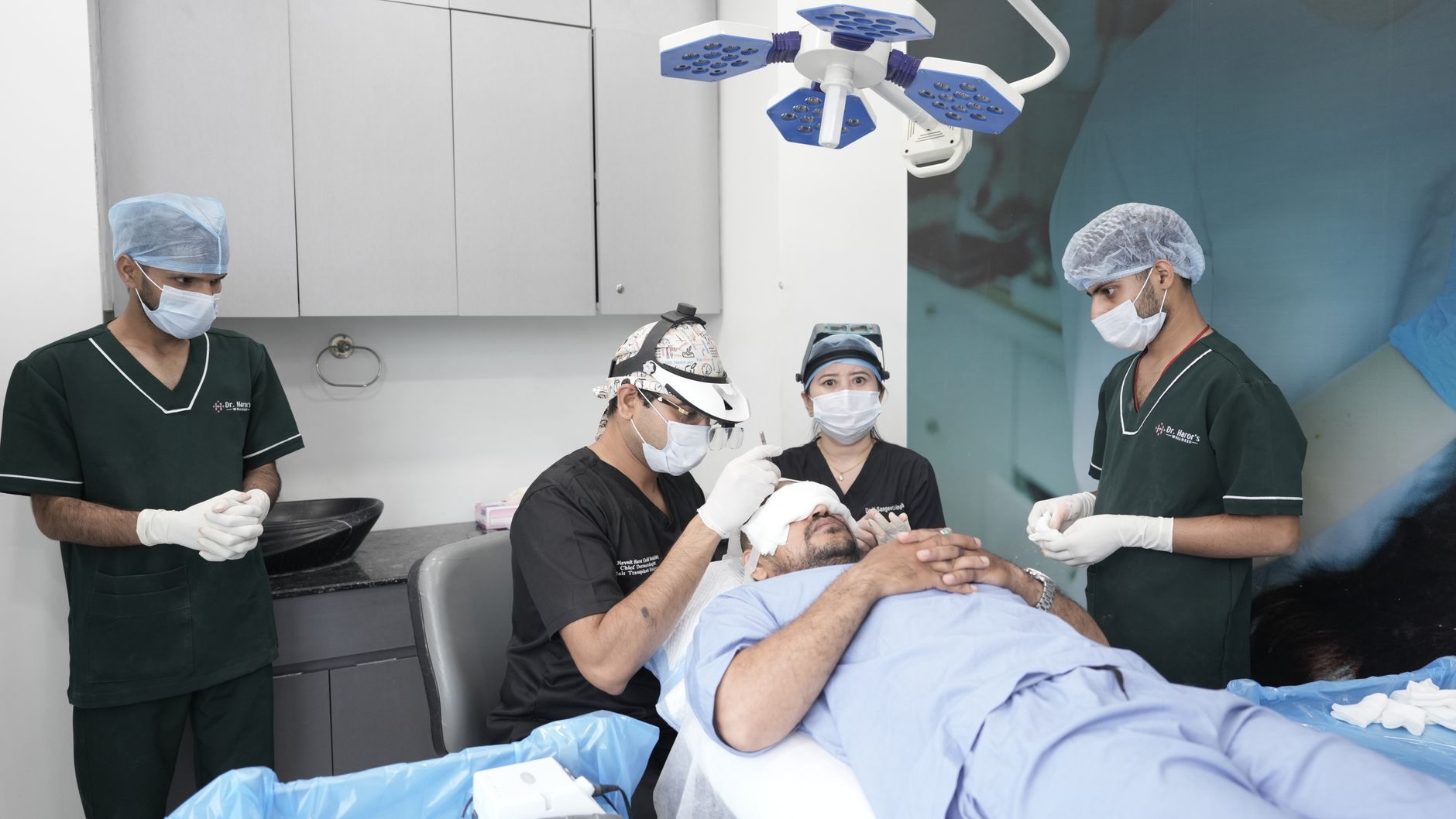
What to expect
Weeks 1–2
Healing is underway; the transplanted hairs are still in place. Shedding has usually not started yet.
Weeks 2–6 — shedding
The transplanted hairs fall out, sometimes alongside some nearby native hairs. Alarming to see, but expected — the follicles stay in the scalp.
Weeks 6–12 — the quiet phase
The scalp looks settled and often much as it did before. Little visible change happens here, which is completely normal.
Month 4 — regrowth begins
New hairs start to appear, fine at first, as the follicles restart their growth cycle.
Where to go next
 Patient journeyAfter a Hair Transplant: Aftercare GuideThe aftercare that protects your result — wa…What to expect ResultsHair Transplant After 1 MonthWhat to expect one month after a hair transp…See results Patient journeyHair Transplant TimelineA week-by-week and month-by-month timeline o…What to expect ResultsHair Transplant After 3 MonthsThe three-month mark after a hair transplant…See results
 Patient journeyDonor Area After a Hair TransplantHow the donor area heals after FUE, what's n…What to expect
Common questions
Is shock loss normal after a hair transplant?
Will the hair that falls out grow back?
Can shock loss affect my existing, non-transplanted hair?
Is shock loss a sign the transplant failed?
When does shock loss happen?
Can I prevent shock loss?
How long does shock loss last?
Start with a free hair analysis
Share a few photos and our patient team will come back with an indicative plan, the technique that fits and the package that applies — no obligation.