

Hair Transplant Glossary
A hair transplant consultation moves quickly through unfamiliar language — grafts, follicular units, donor and recipient areas, FUE, DHI, shock loss and more. This glossary gives plain-English meanings for the terms you are most likely to meet before, during and after treatment in Turkey, so a quote or plan is easier to read honestly. Definitions here are general explanations, not medical advice; we confirm what any term means for your individual case at a personal assessment.
How to use this glossary
The words on a clinic's website, in a WhatsApp reply or on a written plan can make a procedure sound either simpler or more technical than it is. Understanding the vocabulary lets you ask sharper questions — for example, whether a stated graft figure is an indicative range or a confirmed number, or whether a technique name describes the extraction method, the implantation method, or both.
Treat every entry below as a starting point rather than a rule. Hair characteristics, donor supply and goals differ from person to person, so the same term can carry slightly different practical weight for two people. We confirm how each concept applies to you after examining your scalp in person; individual results vary.
Extraction, implantation and the terms that blur them
Several terms describe the same journey — moving hair from where you have a stable supply to where it has thinned — but at different stages. FUE and DHI, for instance, are often discussed as rivals, yet they overlap: both remove follicular units one at a time, and the main difference sits in how those units are placed. Reading the glossary with that framing makes marketing claims easier to weigh.
Where a definition mentions a range or a general figure, it is illustrative only and not a quote for your case. Numbers such as graft counts are set at assessment, not chosen from a menu, which is why an honest plan avoids fixed promises made before anyone has looked at your hair.
Cost and package words worth knowing
Some of the most consequential vocabulary appears not in the clinical plan but in the quote. Terms like per-graft pricing, all-inclusive package, graft count and revision policy shape what you actually pay and receive, and they are easy to misread. A per-graft figure multiplied by an estimated count is not the same as a fixed total, and an all-inclusive package can mean different things from one clinic to another, so it is worth asking exactly what each term covers.
Throughout the site, and in the table below, any cost mentioned is an indicative range rather than a quote for your case. The graft number is set at a personal assessment of your donor area and goals, not chosen from a list; at Natural Hair Turkey it does not change the package price.
Words that overpromise, and why we avoid them
Some phrases you will meet in marketing are worth recognising precisely so you can weigh them critically. Language such as guaranteed, permanent, painless, best or 100 percent success sounds reassuring but sits awkwardly with how surgery actually works, where outcomes depend on the individual and honest sources speak in terms of typical results and ranges. You will not find those absolutes used as claims on this site.
Instead we use qualified wording — typically, usually, often, individual results vary, we confirm — not as a hedge but because it is accurate. If a clinic leans heavily on absolute promises, that is a reason to ask more questions rather than fewer.
| Term | Meaning |
|---|---|
| Graft | A small piece of tissue containing one or more hair follicles, moved from the donor area to the thinning area. Graft counts are indicative until we confirm them at assessment. |
| Follicular unit | The natural grouping in which hair grows — usually one to four hairs sharing a single opening. Transplanting these intact groups is what helps a result look natural. |
| FUE (Follicular Unit Extraction) | A method where individual follicular units are removed one by one from the donor area using a small punch, rather than by removing a strip of scalp. |
| DHI (Direct Hair Implantation) | An approach where extracted grafts are placed directly into the recipient area using a pen-shaped implanter tool, so channel creation and placement happen in one step. |
| Sapphire FUE | An FUE variation where recipient channels are opened with blades made from sapphire rather than steel. It refers to the tool used, not a separate kind of transplant. |
| Donor area | The region hair is taken from, usually the back and sides of the scalp, chosen because that hair is typically more resistant to thinning. Donor supply is finite and is assessed carefully. |
| Recipient area | The thinning or bald region where grafts are placed, such as the hairline, mid-scalp or crown. |
| Norwood scale | A common reference chart describing typical patterns and stages of male hair loss, used to discuss your situation — not a diagnosis on its own. |
| Shock loss | Temporary shedding of existing hairs around the treated area after surgery, caused by the trauma of the procedure. It is usually temporary, though outcomes vary. |
| Shedding phase | A normal stage, often in the weeks after surgery, when transplanted hairs fall out before the follicles begin to regrow. The follicle stays in place even when the visible hair sheds. |
| Density | How closely hairs sit together in a given area, often described per square centimetre. Achievable density depends on your donor supply and hair characteristics. |
| Hairline design | The planned shape and position of a new or restored hairline, mapped with you before surgery to suit your face, age and goals rather than a single template. |
| PRP (Platelet-Rich Plasma) | A treatment using a concentrated portion of your own blood, sometimes discussed alongside a transplant as a supportive option. Evidence and suitability are assessed individually. |
| Telogen | The resting stage of the natural hair growth cycle, when a hair is no longer actively growing and may eventually shed. |
| Anagen | The active growing stage of the hair cycle, when the follicle is producing hair. Transplanted follicles are expected to re-enter this cycle over time. |
| Redistribution | The underlying principle of a transplant — relocating existing hair from a fuller donor area to a thinner one, rather than adding new hair you did not already have. |
| Dense packing | Placing grafts close together in a recipient area to build fuller-looking coverage. How dense packing can safely go depends on your donor supply and blood flow, and is judged by the surgeon. |
| Unshaven / U-FUE | A technique where some or all of the hair is left longer rather than fully shaved, which can suit people who prefer less visible signs of surgery. Suitability depends on the case and is confirmed at assessment. |
Where to go next
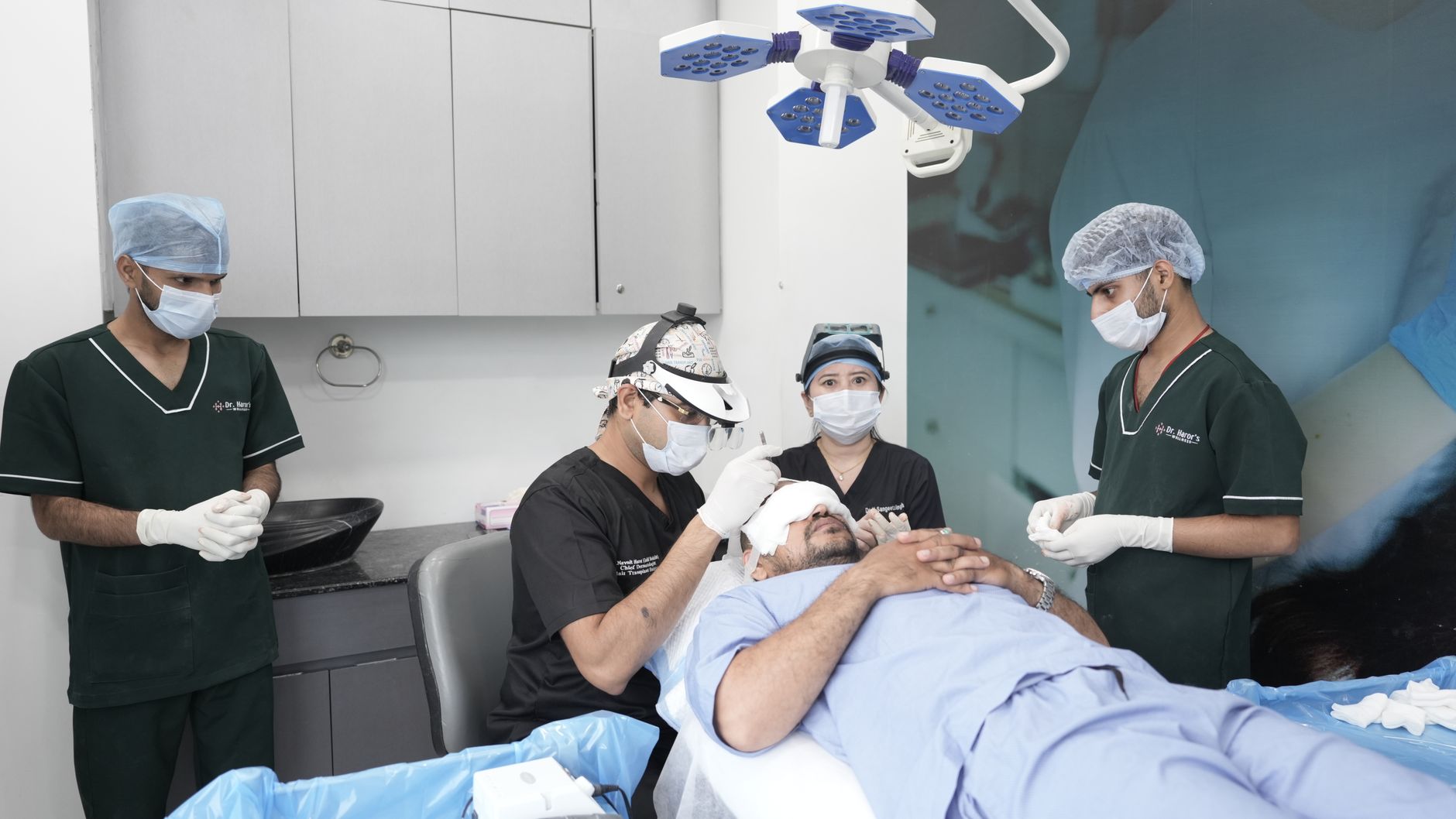 TechniqueFUE Hair Transplant in TurkeyFollicular Unit Extraction (FUE) in Istanbul…How it works
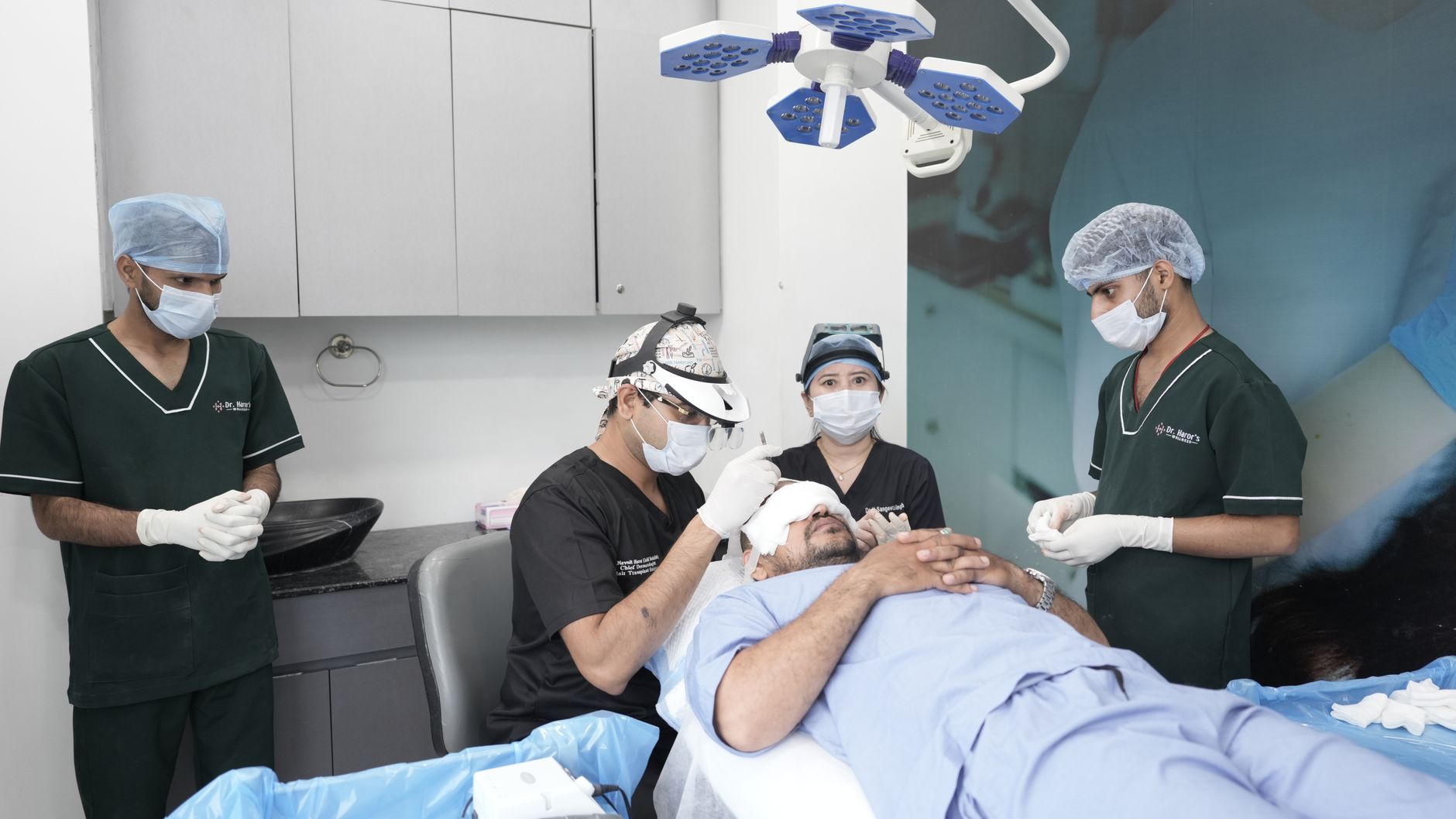 TechniqueDHI Hair Transplant in TurkeyDirect Hair Implantation (DHI) with implante…How it works Free toolNorwood Scale CalculatorIdentify your hair loss stage on the Norwood…Try the tool GuideContact Natural Hair TurkeyGet in touch for a free hair analysis — What…Read the guide
Common questions
Do these definitions apply exactly to my case?
Why is shedding after a transplant considered normal?
Are the graft numbers mentioned here a quote?
Is FUE better than DHI, based on the definitions?
What is the difference between the donor and recipient area?
Are these the only terms I'll come across?
Start with a free hair analysis
Share a few photos and our patient team will come back with an indicative plan, the technique that fits and the package that applies — no obligation.